Inquiry Us
Leave Your Message

2026 Top 5 Axis Machining Centers for Global Buyers

A 5 Axis Machining Center can reach several sides of a component in one setup. That matters when a part has deep pockets, angled surfaces, or tight positional tolerances. Fewer setups can reduce handling and alignment errors, though they do not guarantee better parts. Tooling, programming, machine rigidity, and operator experience still matter.

The market is changing alongside wider factory automation. The International Federation of Robotics reported 4.28 million industrial robots operating in factories worldwide in 2023, a 10% increase from 2022 (World Robotics 2024). This figure does not measure five-axis machine sales, but it signals a broader move toward automated production. Grand View Research estimated the global CNC machine market at approximately $101 billion in 2023, with continued growth projected through 2030. Market estimates differ by scope, so buyers should treat forecasts as direction, not certainty.

For global buyers, choosing among leading machines means looking beyond headline speed. Consider work envelope, axis configuration, spindle performance, control-system familiarity, service coverage, and the cost of installation. A machine that fits a catalog specification may still struggle with a real part. Details matter. This guide compares five-axis machining centers for different production needs, while recognizing that no single model suits every shop. Some comparisons will remain imperfect without application-specific trials; that is worth admitting before a purchase decision.

2026 Top 5 Axis Machining Centers for Global Buyers

How 5-Axis Machining Centers Work

2026 Top 5 Axis Machining Centers for Global Buyers

How 5-Axis Machining Centers Work

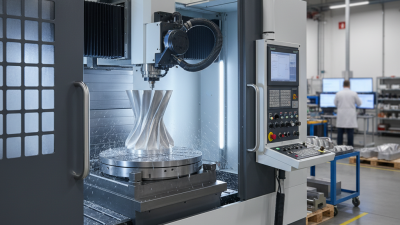
A five-axis machining center moves a cutting tool along three linear directions: X, Y, and Z. Two additional rotary axes tilt or rotate the tool, the workpiece, or both. Their exact arrangement depends on the machine design. This extra movement lets the cutter approach angled surfaces without repeatedly repositioning the part.

Consider a small aluminum housing with holes on its top and side. On a three-axis machine, an operator may need to unclamp and turn it between operations. A five-axis machine can reach more faces in one setup, often reducing alignment errors and fixture changes. Some jobs use indexed positioning, where the rotary axes lock before cutting. Others use simultaneous motion, with all five axes moving as the tool follows a curved surface.

That matters.

Fewer setups do not guarantee better parts. Long tools can flex, and rotary movement can bring the cutter dangerously close to a fixture. Careful programming, toolpath simulation, and machine calibration remain essential. Even experienced teams sometimes discover that a planned tool angle leaves too little clearance. It is worth checking the setup at the machine, not just on screen. A five-axis system expands access, but good results still depend on sound process choices.

Criteria for Evaluating 2026 Models

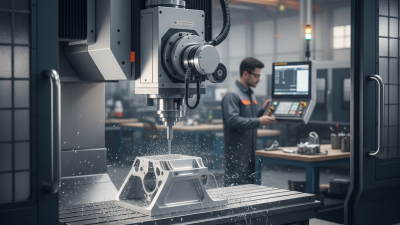
For global buyers, a five-axis machining center should be judged by verified performance, not brochure speed. Check whether the supplier reports positioning accuracy and repeatability under ISO 230-2, including test conditions and thermal state. Ask for a part trial using your material, tool length, and tolerance requirements. A cold machine may measure beautifully; a warm spindle can tell a different story. That detail matters.

Evaluate the working envelope, spindle torque, tool capacity, and chip evacuation together. A large table is not useful if the rotary axes reduce usable clearance. Request cycle-time evidence for a representative component, with tool changes and probing included. Also examine service access, local technical support, and availability of critical parts. These are less glamorous. They still affect uptime.

Automation readiness deserves practical scrutiny. The International Federation of Robotics reported 4,281,585 industrial robots operating worldwide in 2023, in its World Robotics 2024 report. That figure signals broad adoption, but it does not prove every shop needs a robot cell. Check interface options, pallet handling, and recovery after interruptions. Ask how the machine logs alarms and tracks tool life. A simple, reliable setup may outperform a complex cell that staff cannot maintain. Buyers should compare acceptance-test records, warranty terms, and documented service response times, rather than relying on promises alone.

2026 Top 5 Axis Machining Centers for Global Buyers — Criteria for Evaluating 2026 Models
Evaluation Criterion Weight What to Compare Evidence to Request Buyer Evaluation Guidance
1. Work Envelope and Axis Configuration 25% Linear-axis travels, rotary-axis range, table or trunnion dimensions, maximum workpiece size, and permitted workpiece mass. Dimensioned machine layout, axis travel specifications, rotary-axis load limits, and a workpiece setup drawing. Confirm that the complete part, fixture, and tool assembly fit within the stated working envelope. Check for potential collisions throughout the required toolpaths.
2. Accuracy and Repeatability 25% Linear positioning accuracy, bidirectional repeatability, rotary-axis performance, thermal stability, and volumetric accuracy where specified. Test reports stating measurement method, machine condition, environmental conditions, and test location. ISO 230-2 describes methods for determining positioning accuracy and repeatability of numerically controlled machine tools. Compare results only when test methods and conditions are comparable. Ask for application-specific machining results when the finished part has tight geometric or positional tolerances.
3. Spindle and Cutting Capability 20% Maximum spindle speed, power and torque curves, spindle interface, tool dimensions, and the materials and cutting operations the machine is intended to handle. Spindle performance charts, tool-interface details, recommended cutting parameters, and sample machining results for comparable materials. Match the full power and torque curve to the planned work. Maximum spindle speed alone does not show whether a machine can sustain the required cutting load.
4. Tool Management and Automation Readiness 15% Tool magazine capacity, tool size and weight limits, chip-to-chip or tool-change information, probing options, and compatibility with pallet or robotic automation. Tool magazine specifications, automation interface documentation, supported probing equipment, and cycle-time definitions. Check that the tool list fits the magazine limits and that automation interfaces are included or clearly identified as optional. Compare cycle times using the same measurement definition.
5. Service, Safety, and Total Cost of Ownership 15% Installation requirements, electrical and compressed-air needs, guarding, operator training, service response arrangements, spare-parts availability, and energy consumption. Installation checklist, safety documentation for the destination market, service terms, training plan, recommended spare-parts list, and utility consumption data. Evaluate the complete delivered and operating cost, including installation, tooling, maintenance, training, and downtime risk. Verify that the proposed configuration meets applicable local requirements.
Suggested scoring method Rate each criterion from 1 to 5 using comparable documentation, then multiply each rating by its weight. Treat the result as a buyer’s screening score—not as a verified ranking of specific machines.

Five Leading 5-Axis Machining Centers for Global Buyers

2026 Top 5 Axis Machining Centers for Global Buyers

Five Leading 5-Axis Machining Centers for Global Buyers

Choosing among five-axis machining centers starts with the parts, not the brochure. A machine with a tilting rotary table can suit compact components, while a swivel-head design may provide better access to tall workpieces. Check travel, spindle torque, tool capacity, and workpiece loading together. A generous axis range looks useful, but it does not guarantee clearance for a real fixture.

For global buyers, compare practical support as carefully as cutting performance. Ask about installation, operator training, spare-parts availability, and service response in your region. Request a sample-cut review using your material and tolerances. It may reveal chatter or setup limits that a polished demonstration misses. Not every supplier can support every market equally well.

Tips: Bring a drawing, fixture details, and the heaviest expected workpiece to the evaluation. Confirm floor space, power requirements, and chip-management needs before ordering. Leave room for uncertainty; production conditions rarely match a showroom perfectly.

Applications and Industry Fit

Applications and Industry Fit

A five-axis machining center earns its place when parts have compound surfaces, angled features, or several sides requiring accurate alignment. Aerospace is a natural fit: turbine components, structural brackets, and impellers often need access from multiple directions. Boeing’s 2024 Commercial Market Outlook forecasts demand for 43,975 new airplanes through 2043, indicating sustained production needs—not a guarantee that every shop needs five-axis capacity. For buyers, evaluate part geometry, annual volume, material, and tolerance before comparing machine specifications.

Medical-device makers can use five-axis machining for contoured orthopedic components and small, intricate instrument parts. Automotive suppliers may benefit when producing complex prototypes, tooling, or lightweight components, though dedicated high-volume lines may be more productive for simpler shapes. Deloitte’s 2025 Manufacturing Industry Outlook describes ongoing investment in digital capabilities and advanced production; however, software cannot compensate for poor fixturing or weak process planning. That part is easy to underestimate. A practical test is to run representative workpieces and inspect tool access, surface finish, cycle time, and repeatability. Also consider operator skills, probing, maintenance support, and the cost of suitable cutters. The fifth axis can reduce setups, but it can add programming and verification work. A mismatch remains possible. A machine’s value depends on the jobs it will actually run.

Global Purchasing, Service, and Ownership Considerations

For global buyers, choosing among five-axis machining centers requires more than comparing spindle speed or table size. Review the work envelope, rotary-axis accuracy, controller functions, and thermal stability together. Request test cuts using your own material and tolerances. A machine that performs well on aluminum may struggle with hardened steel.

Service planning often decides long-term ownership costs. Confirm whether trained technicians are available within your region and time zone. Ask about remote diagnostics, response times, training, and critical spare-parts inventory. A damaged encoder should not stop production for six weeks. Check electrical requirements, foundation drawings, coolant systems, and crate dimensions before shipment. Small oversights become expensive delays.

Ownership data deserves equal attention. Compare energy use, preventive maintenance intervals, tool capacity, and software support fees. Speak with users operating similar machines for more than two years. Their comments often reveal noise, calibration drift, or difficult interfaces. I would not trust a polished demonstration alone. Factory acceptance tests can miss problems that appear after installation. No evaluation is perfect. Buyers should record acceptance criteria, inspect sample parts, and measure repeatability after warm-up. A slightly higher initial cost may provide better service access and fewer production interruptions, but this depends on local support quality. That part is easy to underestimate.

2026 Top 5 Axis Machining Centers for Global Buyers

Global purchasing, service, and ownership considerations based on typical published specification ranges for five-axis machining center categories.

The comparison uses practical procurement indicators: typical spindle speed, tool capacity, simultaneous machining capability, and recommended service-response priority. Compact and high-speed platforms generally favor rapid production and lower floor-space requirements, while large and heavy-duty platforms provide greater work envelope and rigidity. Global buyers should also confirm local technical support, spare-parts availability, training, power compatibility, import requirements, and total ownership cost before purchase.