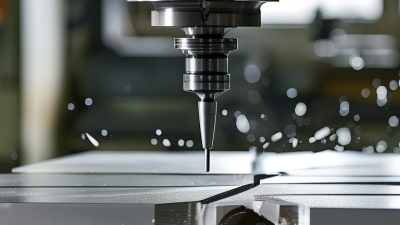
Choosing among the Top China Vertical Machining Center Manufacturers requires more than comparing catalog prices. A reliable supplier should demonstrate machining expertise, stable production capacity, and clear quality controls. This guide examines manufacturers through practical indicators, including machine structure, spindle performance, control systems, and after-sales support. It also considers factory experience, export records, and the ability to customize equipment for different industries.
Details matter. Look for rigid castings, protected guideways, accessible electrical cabinets, and clean assembly areas. Ask how each Vertical Machining Center is tested before shipment. Useful evidence may include inspection reports, sample machining results, component specifications, and documented service procedures. A serious manufacturer should explain positioning accuracy, repeatability, tooling options, and maintenance intervals without hiding behind vague marketing language.
No ranking is perfect. A company with impressive equipment may still provide slow communication or limited technical support. A lower-priced machine may create higher costs through downtime, training gaps, or difficult spare-parts access. These weaknesses deserve attention. Buyers should verify certifications, visit the factory when possible, and request references from comparable users. The strongest suppliers combine engineering knowledge with consistent communication and measurable performance. This introduction provides a practical foundation for evaluating leading Chinese manufacturers carefully, realistically, and with long-term production needs in mind. Reliable decisions take evidence.
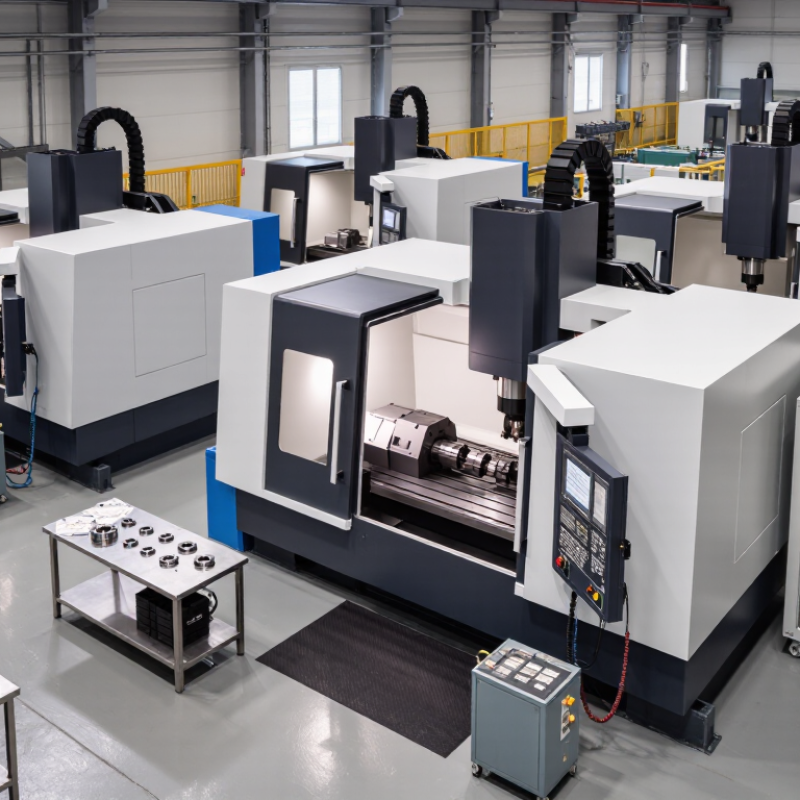
A vertical machining center, or VMC, is a computer-controlled machine with a spindle positioned above the worktable. It removes material from metal, plastic, or composite parts through milling, drilling, tapping, and boring. The cutting tool moves along programmed axes, while an automatic tool changer selects different tools during one cycle. Most VMCs use three axes, although four- and five-axis configurations can machine more complex surfaces.
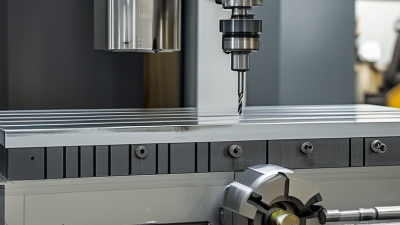
The setup is visually practical. A steel fixture holds the workpiece on a flat table, while coolant flows around a rotating cutter. This arrangement gives operators a clear view of the cutting area and usually simplifies loading. According to Grand View Research’s 2024 machine tools analysis, rising automation and precision requirements continue to support demand for computer numerical control equipment. The report also identifies automotive, aerospace, and general engineering as important application sectors.
Accuracy depends on more than the machine’s advertised specification. Tool condition, thermal growth, fixture rigidity, and operator experience all affect results. The International Organization for Standardization’s ISO 230 series provides testing methods for machine-tool accuracy and performance. That matters in production audits. Still, a VMC is not automatically precise. Poor workholding can spoil a good program. A first-pass setup may need correction. This is often overlooked. Manufacturers should compare spindle speed, travel range, repeatability, control functions, and service support against the actual part requirements.
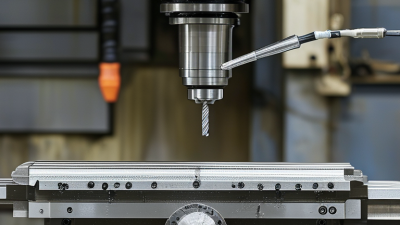
China has become a major hub for vertical machining center production. Its strength comes from a dense industrial network. Casting suppliers, spindle makers, control engineers, and tooling companies often operate within the same regions. This proximity shortens purchasing cycles and simplifies technical coordination.
Factories can source machine beds, linear guides, motors, and electrical cabinets efficiently. Large ports and established logistics routes also support overseas delivery. Many manufacturers now use automated inspection equipment, laser calibration, and digital production records. These practices help improve accuracy and repeatability. Skilled technicians remain essential.
China also offers flexible production for different industries. A buyer may request a compact VMC for small aluminum parts or a rigid model for steel components. Manufacturers can adjust table size, spindle speed, enclosure design, and software functions. This flexibility is practical for workshops with changing orders. It is not always perfect. Quality can vary between suppliers, even when specifications look similar. Careful buyers should review inspection reports, test-machining results, and service response times. Factory visits can reveal details that brochures omit, such as coolant management, assembly cleanliness, and operator training. Clear drawings and acceptance standards prevent expensive misunderstandings. Some suppliers still need stronger communication with international customers, especially during customization. That weakness deserves attention.
Top China Vertical Machining Center Manufacturers
Evaluating Chinese VMC manufacturers requires more than comparing quotations. Start with machine structure, spindle performance, and quality-control records. A rigid cast-iron bed should resist vibration during heavy cutting. Ask for spindle runout data, positioning accuracy, and repeatability test results. Request reports based on recognized standards, such as ISO 230.
Factory experience also matters. Review the manufacturer’s installed machines, machining applications, and export history. A supplier producing aerospace parts may not suit general mold or automotive work. Ask whether technicians perform test cuts using your materials, tooling, and tolerance requirements. Chips, coolant flow, surface finish, and cycle time reveal practical performance.
Service reliability deserves equal attention. Check spare-parts availability, remote diagnosis, technician response times, and warranty terms. Clear documentation is essential, including electrical diagrams, maintenance schedules, and inspection records. Visit the factory if possible, but remember that one visit cannot prove long-term consistency. A polished showroom can distract from weak process control.
Price remains important, yet the lowest offer may conceal limited testing or expensive downtime. Compare total ownership costs over several years. Include installation, training, tooling compatibility, energy use, and preventive maintenance. Communication quality is another useful test. If technical questions receive vague answers before purchase, support may become harder later. Manufacturers should provide traceable data, realistic delivery commitments, and measurable acceptance criteria. Some evaluations still depend too heavily on brochures. That is worth reconsidering.
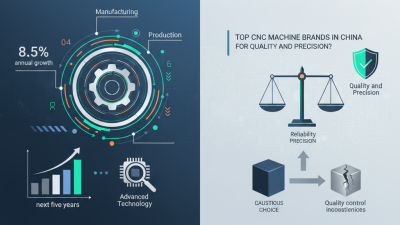
The chart presents an illustrative procurement weighting for comparing Chinese VMC manufacturers. Accuracy, machine rigidity, reliability, service capability, total cost, and compliance are commonly reviewed together rather than by price alone.
Top China Vertical Machining Center Manufacturers
Leading China Vertical Machining Center Manufacturers are gaining attention through measurable production capabilities, not slogans. The China Machine Tool Industry Association reported steady recovery in domestic metalworking demand in recent years. Industry reports also identify China as one of the world’s largest machine-tool producers and consumers. This scale supports stronger supply chains for castings, spindle systems, controls, and automation.
Reliable manufacturers should show evidence from real machining environments. Ask for spindle speed, positioning accuracy, thermal compensation, and cutting-test records. A stable vertical machining center should produce consistent holes and surface finishes across repeated batches. Buyers should also inspect guideway protection, chip evacuation, service response, and spare-parts availability. These details often matter more than a polished catalog. Factory experience helps, but it does not remove every risk.
Tips: Request a sample test using your actual material and tooling. Compare cycle time, tool wear, power use, and dimensional results. Check third-party calibration reports when possible. Reports from Grand View Research and Fortune Business Insights describe continued growth in CNC equipment demand, driven by automation and advanced manufacturing. Still, market forecasts are not purchase guarantees. A lower initial price may hide training gaps, software limits, or delayed technical support. One overlooked detail can become a costly production interruption.
| Evaluation Dimension | Common Specification or Range | Typical Application | What Buyers Should Verify |
|---|---|---|---|
| Machine Configuration | 3-axis, 4-axis, 5-axis, or machining-center configurations with optional rotary tables | Prismatic parts, indexed machining, complex aerospace and medical components | Axis count, rotary-table integration, workholding method, and simultaneous interpolation capability |
| Typical X/Y/Z Travel | Approximately 500–1,500 mm / 400–800 mm / 400–700 mm for many general-purpose models | Molds, fixtures, automotive components, industrial equipment parts | Required component envelope, tool clearance, fixture height, and usable table area |
| Spindle Speed | Common ranges include 8,000–12,000 rpm; high-speed configurations may reach 15,000–24,000 rpm | Steel cutting, aluminum machining, graphite work, and fine surface finishing | Rated power, continuous torque, maximum torque, balancing grade, and speed range |
| Spindle Taper | BT40 is widely used for general machining; BT50 is common for heavier cutting; HSK interfaces are used for high-speed applications | Standard milling, heavy-duty roughing, and high-speed tool changes | Toolholder standard, pull-stud specification, allowable tool mass, and spindle-nose condition |
| Table Load Capacity | Often approximately 400–2,000 kg, depending on table size and machine structure | Small precision parts through large fixtures and heavy steel components | Static and dynamic load limits, load distribution, pallet dimensions, and fixture weight |
| Automatic Tool Changer | Common capacities are 16–32 tools; larger production systems may use 40 or more tool positions | Multi-operation machining and unattended production cycles | Tool-to-tool time, chip protection, tool diameter limits, tool length limits, and monitoring functions |
| Rapid Traverse Rate | Approximately 20–48 m/min on many production-oriented vertical machining centers | Short-cycle production and parts with frequent positioning moves | Acceleration, jerk control, axis-drive performance, and actual cycle-time results |
| Positioning Accuracy | Often specified around ±0.005–±0.010 mm for general-purpose machines; values vary by model and test conditions | Precision fixtures, molds, dies, and repeat production components | Test method, measurement conditions, thermal compensation, and inspection report based on ISO 230-2 or an agreed standard |
| Repeatability | Commonly specified within approximately ±0.003–±0.005 mm on well-calibrated production models | High-volume machining where consistent part dimensions are required | Axis direction, measurement location, machine warm-up procedure, and environmental temperature |
| Machine Structure | Cast-iron columns and bases are commonly used; larger structures may include reinforced box ways or linear guideways | General production, heavy cutting, and applications requiring vibration control | Casting rigidity, guideway design, foundation requirements, damping performance, and machine mass |
| Control and Connectivity | CNC control with G-code support, tool offsets, canned cycles, probing options, and network connectivity | Standalone machining, production monitoring, and digital workshop integration | Supported file formats, remote diagnostics, data interfaces, probing compatibility, and operator language options |
| Coolant and Chip Management | Flood coolant is standard; options may include through-spindle coolant, chip conveyors, filtration, and oil mist systems | Continuous production, deep-hole drilling, aluminum machining, and high-volume chip removal | Pump pressure, tank capacity, filtration accuracy, chip-conveyor configuration, and coolant compatibility |
| Suitable Materials | Aluminum alloys, carbon steel, stainless steel, cast iron, copper alloys, plastics, and selected hardened materials | Automotive, aerospace, electronics, energy, tooling, and general engineering | Cutting-force requirements, spindle torque curve, tooling strategy, coolant method, and workholding rigidity |
| Quality and Acceptance Documentation | Factory test records, geometric inspection, spindle test results, electrical documentation, and packing records | Equipment qualification, export purchasing, and production-line acceptance | Acceptance criteria, inspection instruments, calibration status, warranty terms, spare-parts list, and service response time |
Note: Specifications are representative industry ranges for vertical machining centers manufactured in China. Actual performance depends on the machine model, configuration, tooling, installation, operating conditions, and acceptance test method.
Selecting the right Chinese VMC supplier requires more than comparing prices. According to VDW’s World Machine Tool Statistics 2024, China remained the world’s largest machine-tool producer in 2023, with output near €27 billion. This scale offers broad engineering capacity, but supplier quality still varies. Request documented test results for positioning accuracy, repeatability, spindle runout, and thermal stability. These measurements should follow ISO 230-2 or an equivalent national standard. Ask for actual inspection records, not only catalog claims.
Evaluate the machine around your parts and process. A steel component may need higher spindle torque, better coolant control, and a rigid casting. Aluminum work may prioritize speed, chip evacuation, and acceleration. Review the supplier’s installation history in similar factories. Check commissioning support, spare-part response, software training, and export packaging. A low purchase price can become expensive after repeated downtime. This is often overlooked. Also inspect the factory’s assembly area, calibration equipment, and final run-in procedure. A polished showroom proves little.
Tips: Send sample drawings and materials before requesting quotations. Compare cycle time, tool life, power consumption, and five-year service costs. Request a witnessed acceptance test using your workpiece. Confirm warranty exclusions in writing. ISO 10791 can guide machining-center testing. No checklist is perfect. Leave room for practical judgment, because real cutting conditions may expose weaknesses that laboratory data misses.