Inquiry Us
Leave Your Message

Why Is Machine Vertical Important for Global Buyers?

Why Is Machine Vertical Important for Global Buyers?

Machine Vertical matters because it directly affects how manufacturers cut, drill, mill, and inspect components. For global buyers, the decision is not only about machine price. It involves accuracy, production speed, operator skill, maintenance access, and long-term support.

Professor Alexander H. Slocum, a respected MIT manufacturing expert, has emphasized a practical principle: “Precision is not a feature; it is a system outcome.” This idea applies strongly to Machine Vertical equipment. A rigid frame, stable spindle, reliable control system, and carefully aligned axis work together. One weak part can reduce the value of the entire machine.

Look closely at the details.

A buyer may compare two machines with similar specifications. However, one may hold tighter tolerances after eight hours of cutting. Another may need frequent calibration in a hot workshop. These differences affect waste, delivery schedules, and customer confidence. They also influence the real cost of ownership.

Machine Vertical can support repeatable production across different locations. This is valuable for companies managing factories in Asia, Europe, or North America. Standardized controls and documented maintenance procedures can reduce training problems. Spare-part availability matters too.

Still, no machine is perfect. Brochures rarely show every limitation. Buyers should request sample cutting tests, inspection reports, and service references. They should also consider their own materials and tooling.

A stronger decision asks difficult questions. Can the machine maintain accuracy under real workloads? Can local technicians support it quickly? What happens after the warranty ends?

These questions may feel uncomfortable. They often prevent expensive mistakes.
Why Is Machine Vertical Important for Global Buyers?

Vertical Machine Tools: Definition, Types, and Global Manufacturing Roles

Why Is Machine Vertical Important for Global Buyers?

Vertical Machine Tools: Definition, Types, and Global Manufacturing Roles

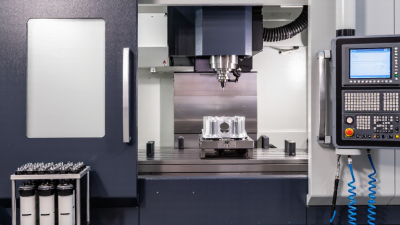
Vertical machine tools position the spindle above the workpiece. This layout gives operators clear access to the cutting area. It also uses factory floor space efficiently. For global buyers, that matters when workshops face limited layouts, rising rent, or frequent production changes.

Common types include vertical machining centers, CNC vertical lathes, drilling machines, and tapping centers. A vertical machining center can mill, drill, and tap several features in one setup. This reduces repositioning errors and handling time. Vertical lathes suit short, wide parts such as flanges, rings, and housings. Some five-axis models machine complex surfaces, but they require stronger programming skills and careful training. More capability is not always better.

In practical sourcing reviews, buyers should examine rigidity, spindle speed, repeatability, control compatibility, and tool capacity. Ask for test-cut evidence, inspection records, and realistic cycle times. A machine may look impressive in a showroom, yet perform differently with stainless steel or cast iron. Check shipping dimensions, electrical requirements, spare-part access, installation support, and operator training. These details often decide production stability after delivery. I have seen buyers focus too heavily on purchase price. That approach can overlook maintenance delays and unsuitable tooling. Vertical machines support global manufacturing because they are adaptable, accessible, and relatively simple to integrate. Still, each factory needs a measured fit, not a fashionable specification.

Why Is Machine Vertical Important for Global Buyers?

Manufacturing value added shows the scale and diversity of industrial production in major manufacturing economies. Vertical machine tools are widely selected because they provide practical access, flexible fixturing, and efficient production for components used across automotive, aerospace, electronics, energy, and general engineering sectors.

Manufacturing value added as a percentage of GDP, selected economies, 2022. Source: World Bank, indicator NV.IND.MANF.ZS. The figures provide market context rather than machine-tool sales data.

Automation Context: 541,302 Industrial Robots Installed Globally in 2023 (IFR)

Why Is Machine Vertical Important for Global Buyers?

Automation is no longer a niche investment. The International Federation of Robotics reported 541,302 industrial robots installed worldwide in 2023. This was the second-highest annual figure on record, despite a modest year-on-year decline. Asia accounted for about 73% of new installations, showing where manufacturing capacity is concentrating. That changes procurement.

The headline number needs context. A welding robot, packaging robot, and semiconductor handling system require different accuracy, software, safety, and service models. The IFR also reported more than 4.2 million industrial robots operating globally in 2023. Global buyers should therefore assess the machine vertical, not only the unit price.

Food production may prioritize washdown resistance.

Metalworking may demand rigidity and cycle consistency.

Electronics assembly can require microscopic repeatability.

The gap matters. A lower-cost machine may perform well during a factory trial but fail under dust, heat, vibration, or three-shift production. Procurement teams should compare payload, reach, uptime evidence, integration requirements, training, and spare-part access.

Independent performance tests are valuable, although they rarely reproduce every factory condition. This is where buying decisions become imperfect. Technical specifications can look precise, while actual productivity depends on operators, layouts, and maintenance discipline.

The IFR data shows strong global adoption, but adoption alone does not prove suitability for every vertical.

Energy Efficiency: Electric Motors Consume 46% of Global Electricity (IEA)

Why Is Machine Vertical Important for Global Buyers?

Energy efficiency deserves close attention when purchasing a vertical machine. The International Energy Agency reports that electric motors consume about 46% of global electricity. This figure includes motors used across factories, buildings, and infrastructure. In a vertical machining center, the spindle motor is only one part. Coolant pumps, chip conveyors, hydraulic units, and cooling fans also draw power.

During an eight-hour shift, these smaller systems may run continuously. A coolant pump left active during loading can waste energy without improving production. Variable-speed drives can reduce this idle demand. Efficient motors also help control heat inside the workshop. Less heat may reduce the burden on ventilation and cooling equipment. However, a high efficiency label does not guarantee low operating costs. Actual results depend on cutting conditions, duty cycles, maintenance, and operator settings.

A practical buyer should request measured energy data under realistic workloads. Ask for readings during cutting, standby, warm-up, and tool changes. Compare kilowatt-hours per completed part, not only motor ratings. This approach reveals hidden consumption. A poorly adjusted machine can waste more energy than expected. We have seen specifications look impressive until auxiliary equipment was included. That detail changes the calculation. Buyers should also check service access, because dirty filters and worn bearings increase electrical demand. Energy performance is useful only when the machine remains correctly adjusted over time.

Why Is Machine Vertical Important for Global Buyers? - Energy Efficiency: Electric Motors Consume 46% of Global Electricity (IEA)

Energy and Purchasing Dimension Verified Data or Technical Fact Why It Matters for Vertical Machines Recommended Buyer Checkpoint Reference
Global electricity impact of electric motors Electric motors consume approximately 46% of global electricity. Motor selection, loading, controls, and maintenance can materially affect the operating cost of pumps, fans, compressors, conveyors, machine tools, and other vertical equipment. Request the motor rated power, expected operating hours, load profile, and annual energy-consumption estimate. International Energy Agency (IEA)
Industrial electricity impact Electric motor-driven systems account for approximately 69% of industrial electricity consumption in the United States. For industrial buyers, the motor and driven system may have a larger lifetime cost impact than the initial purchase price of the machine. Compare total cost of ownership, including electricity, maintenance, downtime, and replacement costs. U.S. Department of Energy, Motor Systems
Motor efficiency classification IEC 60034-30-1 defines international efficiency classes including IE1, IE2, IE3, and IE4. The required efficiency percentage varies by motor output, speed, and frequency. A higher efficiency class generally reduces electrical losses during operation, especially when the machine runs for long periods. Ask for the applicable IEC efficiency class and the test standard used for the declared efficiency. IEC 60034-30-1
Variable-speed operation For centrifugal pumps and fans, power demand follows the affinity relationship: power is approximately proportional to the cube of rotational speed. Reducing speed can produce substantial energy savings when full flow or full air volume is not continuously required. Confirm whether the machine uses a variable-frequency drive and request savings calculations based on the actual duty cycle. U.S. Department of Energy, fan and pump system guidance
Part-load performance Motor efficiency and power factor can change with load; a motor that is significantly oversized may operate less efficiently at light loads. Correct sizing helps avoid unnecessary losses and improves the economic performance of vertical machines. Match motor capacity to the measured or calculated peak load rather than selecting excessive reserve capacity without justification. IEC motor testing principles and motor-system engineering practice
Operating-hours effect Annual energy use can be estimated as: Power × Operating Hours × Load Factor. A small efficiency improvement can become financially significant when equipment operates continuously or for multiple shifts. Request an annual kWh estimate using local electricity prices and the machine’s real operating schedule. Standard engineering energy-use calculation
Power quality and harmonics Voltage imbalance, voltage variation, and harmonic distortion can increase motor heating, losses, and maintenance risk. Stable power quality supports energy efficiency, motor life, and reliable production of vertical machines. Check allowable voltage tolerance, harmonic requirements, protection functions, and compatibility with the site power system. IEC 60034 series and power-quality engineering guidance
Cooling and installation conditions Motor performance depends on ambient temperature, altitude, enclosure type, cooling method, and installation conditions. A motor may require derating in high-temperature, high-altitude, dusty, or poorly ventilated environments. Provide the supplier with site temperature, altitude, humidity, dust level, enclosure requirements, and ventilation conditions. IEC 60034 series
Lifecycle cost priority For many motor-driven systems, electricity and maintenance costs over the service life can exceed the initial purchase cost. Choosing an energy-efficient machine vertical can reduce long-term operating expenditure and carbon emissions. Evaluate purchase price, energy cost, service interval, spare parts, expected life, and disposal requirements together. IEA and U.S. Department of Energy motor-system guidance
Buyer documentation requirements Reliable energy comparisons require rated power, efficiency, speed, load profile, duty type, operating hours, and test conditions. Standardized data makes it easier for global buyers to compare machines from different markets and electrical systems. Include a standardized motor datasheet, efficiency test report, operating curve, warranty terms, and energy-consumption assumptions in the quotation. IEC 60034 series and international procurement best practice
Data should be evaluated against the machine’s actual load profile, operating schedule, local electricity tariff, environmental conditions, and applicable national regulations.

Buyer Metrics: Spindle Speed, Accuracy, Payload, and Total Cost of Ownership

For global buyers, a vertical machining center must fit the job, not just the brochure.
Spindle speed matters when cutting aluminum, small tools, or complex cavities. However, higher speed does not always improve output. Torque at lower rpm, acceleration, cooling, and toolholding stability can matter more. Grand View Research’s 2024 CNC Machine Market report projects more than 8% annual market growth through 2030. That growth increases buyer choice, but also increases comparison errors.

Accuracy needs measurable evidence. Ask for positioning accuracy and repeatability data under ISO 230-2 testing conditions. Check results across the machine’s working envelope, not only near the center. A 0.005 mm specification may look impressive. It can become less useful after thermal changes, long cycles, or poor calibration. I would request sample parts, inspection records, and test-cut results. Numbers alone are not enough.

Payload includes the workpiece, fixture, chuck, and cutting forces. Leave practical capacity, not merely the table’s maximum rating. TCO should include energy, tooling, coolant, maintenance, software, training, shipping, and expected downtime. Deloitte’s 2023 Global Smart Manufacturing Survey reported expected improvements of roughly 10–12% in productivity, capacity, and production output from smart manufacturing investments. Those gains are not automatic for every vertical machine.

Build a three-year model using your own cycle time, labor rate, service costs, and scrap history. That model may expose an uncomfortable truth: the slower machine can deliver the lower cost per good part.

Standards and Compliance: ISO 230-2 Testing for Positioning Accuracy and Repeatability

For global buyers, machine vertical performance depends on more than cutting speed or spindle power. Positioning accuracy and repeatability directly affect hole patterns, mold details, and assembled parts. ISO 230-2 provides a structured method for checking these values under defined test conditions.

A qualified technician usually programs several target positions across the working range. The machine approaches each point from controlled directions, while a laser interferometer or comparable calibrated system records actual movement. The test reveals systematic position errors, reversal effects, and statistical repeatability. Bidirectional results matter. A machine may reach a point accurately from one direction but miss it after an axis reverses. That difference can appear as a small step on a finished component.

Test conditions deserve close attention. Temperature, foundation stability, warm-up time, feed rate, and measurement uncertainty can change the report. Buyers should request the testing date, equipment calibration status, axis travel, approach method, and correction settings. A certificate without these details is difficult to evaluate fairly. It is also risky to compare reports created under different procedures.

A practical inspection should match the buyer’s production needs. Tight aerospace-style tolerances require stronger evidence than general fabrication work. Even then, ISO testing does not guarantee permanent accuracy. Maintenance, transportation, and thermal changes still matter. This is where some purchasing decisions become too optimistic. Ask for raw data when possible. Review deviations with an independent engineer before accepting the machine. Small discrepancies can be manageable, but unexplained ones deserve attention.