How to Choose the Best Vertical Turning Center for Your Needs?
In the competitive landscape of manufacturing, selecting the right Vertical Turning Center (VTC) is critical. A recent report by the International Federation of Robotics indicates that demand for advanced manufacturing technologies, including VTCs, has increased by 30% over the past five years. This highlights the essential role these machines play in enhancing productivity and efficiency.
However, not all Vertical Turning Centers are created equal. Factors such as accuracy, speed, and tooling capability vary significantly between models. A study by the National Institute of Standards and Technology emphasizes that even minor differences in a VTC's specifications can lead to substantial productivity gains or losses. Understanding these nuances is vital for making an informed decision.
Choosing the best Vertical Turning Center requires a deep understanding of your specific machining needs. This includes assessing your production volume, material types, and part complexities. The right choice can lead to significant cost savings and improved product quality. Yet, many manufacturers overlook critical features, leading to regrets down the line. Being well-informed is paramount to avoid such costly mistakes.
Factors to Consider When Choosing a Vertical Turning Center
When selecting a vertical turning center, several key factors come into play. The first consideration should be the size and weight of the parts you intend to work with. If your components are large and heavy, ensure the machine has a robust construction. The capacity of the vertical turning center affects how effectively it can handle your specific workload.
Next, assess the technology features of the center. Look for options like programmable controls and advanced tooling systems. These enhance efficiency and precision in manufacturing processes. However, it’s essential to weigh the complexity of these features against your operational expertise. You might feel overwhelmed if you choose a machine that outpaces your team’s skill level.
Another aspect worth pondering is support and service options. Reliable customer service can greatly influence your operation's uptime. Analyze the availability of spare parts and maintenance services. Reflect on any gaps in your current setup that might need addressing. By considering these elements, you will make a more informed choice tailored to your specific needs.
How to Choose the Best Vertical Turning Center for Your Needs?
Understanding Different Types of Vertical Turning Centers
When exploring vertical turning centers, it’s crucial to understand their different types. Each type serves distinct functions, impacting your machining needs. High-speed vertical turning centers typically offer faster production rates. They excel in precision machining for small to medium-sized parts. These machines enhance efficiency but may require careful handling due to their speed.
On the other hand, heavy-duty vertical turning centers are designed for larger components. They focus more on robustness than speed, providing stability during operation. Consider your workflow: if you work with heavy materials, a heavy-duty center may be more appropriate. However, the trade-off could be a slower cycle time, which might not suit all applications.
Additionally, CNC vertical turning centers incorporate advanced software for precision. They allow remote operation and improved automation. While these machines increase productivity, they also necessitate skilled operators. This can lead to challenges in training staff. Understanding these nuances will help you select a center aligned with your production goals. Balancing speed, size, and technology is key to finding the right fit.
Evaluating Technical Specifications and Capabilities
When assessing a vertical turning center, technical specifications play a crucial role. Focus on key elements like spindle speed, torque, and precision. High spindle speeds can enhance efficiency, but they also require a solid understanding of the machining process. Don't overlook torque; it ensures that materials cut smoothly without excessive wear on your tools.
Another important aspect is the machine's rigidity and stability. A sturdy frame supports better accuracy, but if the weight is too much for your facility, consider alternatives. Pay attention to the cutting tools and their compatibility with various materials. Not all machines perform equally well with every type of material. Some metals may require specific tool setups for optimal performance.
Lastly, evaluate the machine's software capabilities. Advanced controls can make a significant difference in production quality. However, learning complexities may arise with sophisticated systems. Finding the right balance between user-friendliness and advanced features can be tricky. Take time to reflect on your team's expertise and training needs before making a decision. Investing in the right technology is just as important as the specs themselves.
How to Choose the Best Vertical Turning Center for Your Needs? - Evaluating Technical Specifications and Capabilities
| Feature |
Specification A |
Specification B |
Specification C |
| Max Turning Diameter |
800 mm |
1000 mm |
1200 mm |
| Max Workpiece Weight |
500 kg |
800 kg |
1000 kg |
| Spindle Speed |
2000 RPM |
2500 RPM |
3000 RPM |
| Tool Capacity |
12 tools |
20 tools |
30 tools |
| Control System |
CNC |
CNC |
CNC |
| Programming Language |
G-code |
G-code |
G-code |
Assessing Manufacturer Reputation and Customer Support
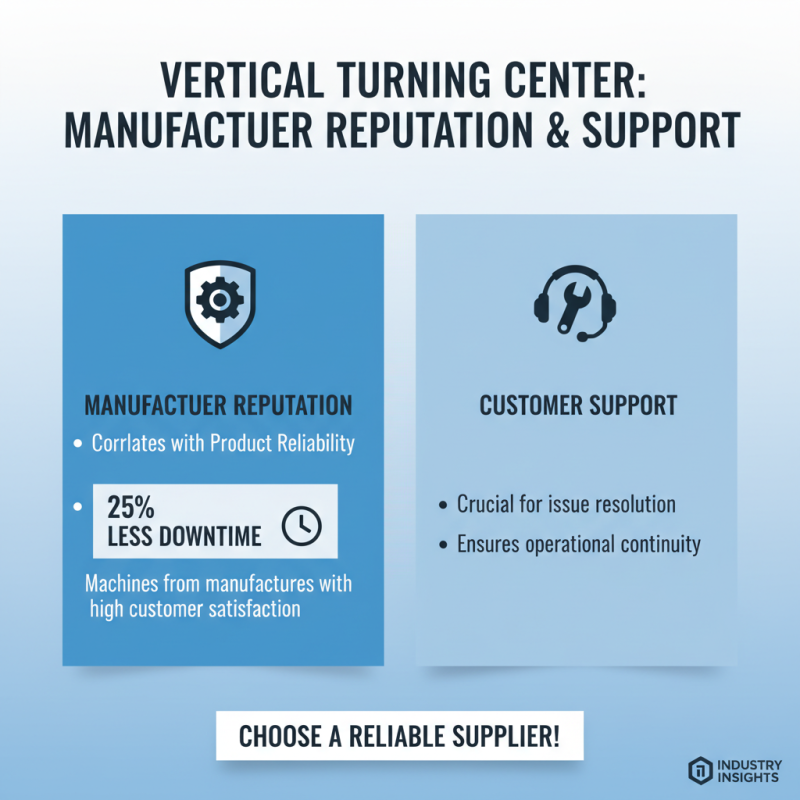
When selecting a vertical turning center, evaluating the reputation of the manufacturer is crucial. A strong reputation often correlates with product reliability. According to a recent industry report, manufacturers with high customer satisfaction scores maintain an average of 25% less downtime in their machines. This statistic highlights the importance of choosing a reputable supplier.
Customer support should also be a priority in your decision-making process. In a survey by a leading machining industry publication, 70% of respondents indicated that effective support directly influences their loyalty to a brand. Quick response times and skilled technicians enhance the overall user experience. However, it's worth noting that not all companies excel in this area. Poor support can lead to frustration and operational delays.
Additionally, consider the long-term implications of your choice. A lower-priced machine from a lesser-known manufacturer may seem attractive. Still, without solid support, it may cost more in the long run. Some customers report unexpected expenses due to inadequate service or lack of spare parts availability. Reflecting on these factors can help in making an informed decision.
Budgeting and Cost Analysis for Your Vertical Turning Center Choices
When considering a vertical turning center, budgeting and cost analysis are crucial. These machines vary in price, with options for every budget. Initial costs include the machine's purchase price, installation, and any necessary accessories. It's important to identify what features are essential for your operations. An advanced model might offer better precision and speed. However, it may not always be the most cost-effective choice for your needs.
Maintenance costs are another critical factor. Regular maintenance ensures longevity but can add up. Calculate potential downtime due to repairs. This can impact your overall productivity and profitability. An almost perfect machine could still have hidden costs. Evaluate your operational forecasts carefully. Consider how often you will need to service the equipment.
Additionally, assess training costs for your team. Familiarizing staff with new technology can take time and resources. Investing in training can lead to better outcomes. However, it's essential to weigh those costs against the benefits. Opting for a slightly outdated model may save money initially. At the same time, it might not meet your production demands in a dynamic market. Finding the right balance between budget and functionality requires careful thought and analysis.