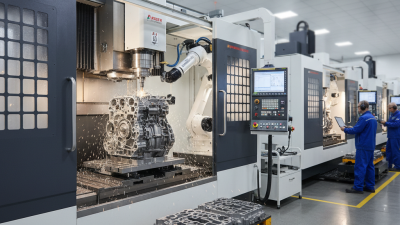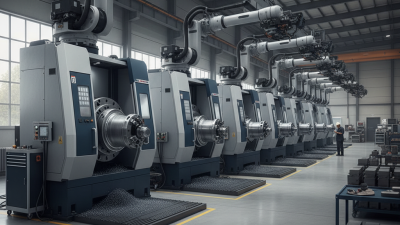
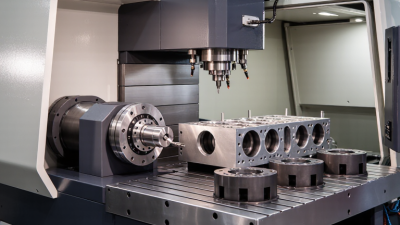
Choosing the right machining platform can shape production speed, quality, and long-term operating costs. A Horizontal Cnc Machine deserves serious attention when your business handles heavy components, repeated operations, or complex side features. Its horizontal spindle directs chips away from the cutting area. This can improve visibility and reduce chip recutting during demanding jobs.
In many workshops, the difference appears on the shop floor. A machinist loads a casting, secures the fixture, and completes several faces with fewer setups. Fewer setups can reduce alignment errors and shorten handling time. Pallet systems may also support steadier production between batches. These advantages matter for automotive parts, industrial housings, pump components, and other large workpieces.
Still, the machine is not automatically the best answer. It requires suitable floor space, trained operators, reliable workholding, and careful process planning. Tool access can feel less intuitive for teams experienced with vertical equipment. That learning curve should be priced honestly. It may affect delivery schedules during the first months.
A sound decision should combine supplier specifications, sample cutting, maintenance records, and operator feedback. Ask about spindle torque, pallet capacity, travel ranges, control systems, and service response times. Inspect the machine’s rigidity under realistic cutting conditions. Do not rely on impressive brochures alone.
The right evidence is practical.
Companies should compare total ownership costs, not only purchase prices. Energy use, tooling, coolant management, training, and downtime can change the final calculation. A Horizontal Cnc Machine can become a powerful production asset. However, its value depends on matching the machine to actual workloads, staff capability, and future growth. That fit requires careful review, not assumptions.
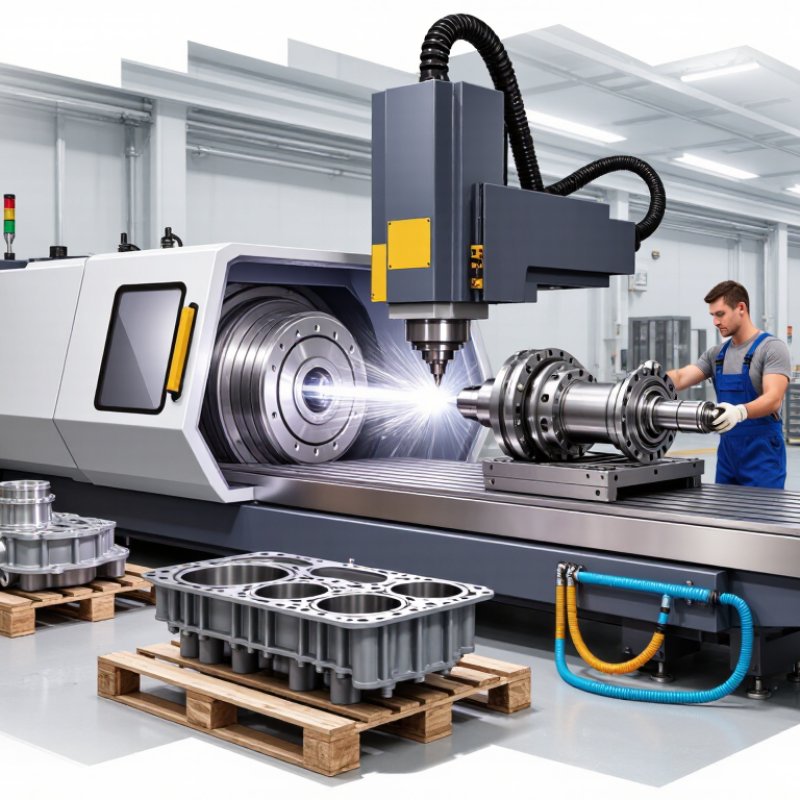
A horizontal CNC machine rotates the workpiece beside a horizontal spindle, creating practical 4-axis access. The fourth axis can index or continuously position the part. This reduces repeated setups on castings, housings, and multi-sided plates. In real production, fewer setups often mean fewer alignment errors. That benefit is easy to underestimate.
Pallets keep parts moving while another fixture is loaded outside the cutting area. This supports steadier utilization and safer operator routines. The 2024 U.S. Manufacturing Technology Orders report recorded approximately $4.7 billion in new machine-tool orders, showing continued investment in production capacity. However, buying capacity alone does not guarantee productivity. Fixture design, tool life, and programming discipline still decide the result.
Chip evacuation is another defining feature. Gravity helps chips fall away from the cutting zone instead of collecting around deep pockets. Chips leave quickly. That can reduce recutting, heat buildup, and manual cleaning, especially during aluminum or cast-iron work. The 2023 World Machine Tool Survey reported continuing demand for automated, high-productivity machining systems. Yet horizontal machining is not perfect. Tall fixtures can limit access, and poor coolant direction may still trap chips. A careful time study should compare loading, cutting, inspection, and cleaning minutes before purchase.
Why Choose a Horizontal CNC Machine for Your Business?
A horizontal CNC machine can reduce repeated handling by machining up to five faces in one clamping. The part stays secure while the spindle approaches from several directions. This improves datum consistency and reduces opportunities for alignment errors. In a typical example, four setups at 25 minutes each consume 100 minutes before cutting begins. One well-designed setup can remove much of that delay. The result depends on the fixture, tool reach, workpiece geometry, and programmer’s planning. It is not automatic efficiency.
Deloitte’s 2024 Smart Manufacturing and Operations Survey found that 92% of manufacturers view smart manufacturing as important for future competitiveness. McKinsey research also links scaled digital manufacturing with productivity improvements commonly reaching 10% to 20%. These figures do not guarantee equal gains from one machine. However, they support a practical direction: measure setup time, first-piece approval, scrap, and operator movement before investing. A horizontal layout may also improve chip evacuation on deep cavities. Sometimes, vertical machining remains the better choice.
Tips: Map every setup with a stopwatch. Record fixture changes, probing, tool adjustments, and inspection time. Use modular fixtures when part families share locating points. Check access before promising five-face machining. A simple test part can expose clearance problems early. Keep one honest baseline. Even experienced teams overlook small delays between operations.
Typical setup-efficiency comparison for prismatic parts requiring machining on multiple faces
| Efficiency Dimension | Horizontal CNC Machine | Conventional Vertical CNC Workflow | Business Impact |
|---|---|---|---|
| Faces accessible in one clamping | Advantage Up to five faces, depending on machine configuration, fixture design, tool access, and part geometry. | Usually one primary face per setup; additional faces generally require repositioning or a multi-axis fixture. | Fewer interruptions for parts with several machined sides. |
| Typical setup count for a five-face part | Often one main clamping when the workholding system and tool reach support the required features. | Commonly three to five setups when each face requires separate access. | Lower setup repetition and less operator handling. |
| Workholding and datum re-establishment | One primary workholding reference can control several operations; rotary indexing can provide repeatable angular positioning. | Datums may need to be re-established after each repositioning, increasing alignment checks. | Reduced risk of cumulative locating and alignment variation. |
| Typical setup preparation time | Approximately 30–60 minutes for a prepared repeat job, including fixture loading, probing, and tool verification. | Approximately 90–180 minutes when three to five separate setups are required. | Potentially more productive spindle time over a complete part cycle. |
| Inter-setup material handling | Normally limited to loading, unloading, and any required fixture change. | Part must be unloaded, cleaned, reoriented, reclamped, and checked between setups. | Lower handling labor and fewer opportunities for surface damage. |
| Dimensional consistency between faces | Improved positional consistency when multiple features are machined from a common clamping reference. | Consistency depends more heavily on fixture repeatability, probing, and operator alignment at each setup. | Useful for cross-face hole patterns, pockets, and intersecting features. |
| Chip evacuation during deep cavity work | Horizontal spindle orientation can help chips fall away from some cutting zones, subject to part geometry and coolant flow. | Chips can collect in pockets or on horizontal surfaces and may require additional coolant or air management. | May support more stable cutting conditions and fewer manual chip-clearance pauses. |
| Best-fit production profile | Medium-to-high volumes, repeat work, complex prismatic parts, and components with several accessible faces. | Low-to-medium volumes, frequent one-face work, simpler parts, and jobs where flexible access is more important than setup reduction. | The best choice depends on part mix, annual volume, fixture investment, and required tolerances. |
A horizontal CNC machine can improve chip evacuation and access to multiple workpiece faces. Yet accuracy claims need measurable proof. ISO 230-2 defines tests for axis positioning accuracy and repeatability. Technicians typically map commanded positions against measured positions across the working stroke. A laser interferometer or calibrated linear scale can reveal positioning errors in micrometres.
The test should include both travel directions. Backlash may appear when the axis reverses. Temperature matters too. A machine can pass in the morning and drift after hours of cutting. ISO 230-2 does not promise perfect production parts; it describes how performance is measured. That distinction is important. The 2024 Fortune Business Insights report valued the global CNC machine market at about 88.9 billion dollars in 2023. More investment makes reliable verification even more necessary.
Tips: Request the complete test report, not only a pass statement. Check test length, environmental conditions, instrument calibration, and uncertainty values. Repeat the test after thermal stabilization. Compare results with your tolerance requirements. A small error can become expensive across a large batch.
Operators should also inspect fixture alignment, tool wear, and workholding stiffness. These factors can hide or imitate axis errors. My practical concern is simple: a highly accurate machine still produces poor parts when setup discipline is weak. Record the baseline, review trends, and retest after relocation or major service.
Accuracy is not a marketing adjective. It is evidence collected under defined conditions.
A horizontal CNC machine can improve productivity when your operation measures performance beyond spindle speed. The stronger question is whether the machine supports an Overall Equipment Effectiveness (OEE) target near 85%, widely used as a world-class benchmark.
OEE combines availability, performance, and quality. A horizontal layout can reduce fixture changes and improve chip evacuation during deep-pocket machining. With multiple pallets, operators may load one station while the machine cuts on another. This can shorten waiting time and protect production flow. For example, a shop running 480 minutes may lose 45 minutes to setup, 30 minutes to minor stops, and 20 minutes to rework. These losses quickly reduce real OEE, even when cutting time looks impressive.
Track every stop reason.
Experienced teams review cycle-time data, tool-life records, and first-pass yield each shift. They also compare planned cycle time with actual results, rather than trusting machine specifications alone. An 85% target should guide improvement, not create unrealistic pressure. Some parts need complex setups, difficult materials, or frequent inspection. In those cases, 85% may be temporarily unreachable.
A horizontal CNC machine still needs disciplined scheduling, preventive maintenance, stable tooling, and trained operators. We have seen promising equipment underperform because loading procedures were inconsistent. That is the uncomfortable lesson. Benchmark the process honestly, then improve one measurable loss at a time.
Benchmarking productivity against the 85% world-class OEE target
OEE is calculated as Availability × Performance × Quality. In this illustrative horizontal CNC machining profile, 90% availability, 95% performance, and 99% quality produce an OEE of 84.6%, closely matching the commonly used world-class benchmark of 85%. Improving uptime, cycle-time consistency, and first-pass quality can help machining operations reach or exceed the target.
The U.S. Department of Energy links motor-driven equipment to roughly 23% of American electricity use. That figure deserves attention in every machining business. A horizontal CNC machine can reduce energy waste through fewer setups, better chip evacuation, and shorter idle periods. However, the machine itself is not automatically efficient. Real savings depend on programming, loading habits, and maintenance.
Start with measured data, not a sales estimate. Record spindle power, operating hours, idle consumption, and your local electricity rate. For example, a machine drawing 18 kW during cutting, for 2,000 hours annually, uses about 36,000 kWh. At $0.12 per kWh, that equals $4,320 in cutting energy alone. Compare this with a newer motor system, reduced cycle time, and fewer manual setups.
The shop floor tells the truth.
In my first ROI estimate, I ignored warm-up cycles and coolant demand. The projected payback looked better than reality. A more reliable review includes compressed air, auxiliary pumps, tool changes, and weekend standby power. Horizontal machining may improve productivity, but energy ROI should use measured production data. Check monthly meter readings after installation. Small programming changes can matter. A five-minute idle period, repeated across dozens of jobs, quietly becomes a large annual cost.