Top Turning Center Machine Features and Benefits for Precision Manufacturing?
In the realm of precision manufacturing, the Turning Center Machine has emerged as a game-changer. According to a recent report by Grand View Research, the global CNC machine market is expected to reach over $100 billion by 2028. This growth highlights the demand for advanced machinery in various sectors. Turning centers offer speed, accuracy, and improved surface finish, making them essential in industries like aerospace and automotive.
These machines provide multi-tasking capabilities. They can handle both turning and milling processes, which saves time. However, not all turning centers are created equal. Some models may lack features that maximize their potential. Manufacturers often face challenges in selecting the right machine. It's important to weigh specifications, including speed, power, and software integration, to make informed decisions.
As technology advances, the landscape changes swiftly. For instance, a machine that was cutting-edge five years ago may now seem outdated. Thus, companies must remain vigilant, continually assessing the features and benefits of their turning center machines. Understanding these dynamics is crucial for any precision manufacturer aiming to stay competitive. The right turning center can mean the difference between success and stagnation.
Top Features of Turning Center Machines in Precision Manufacturing
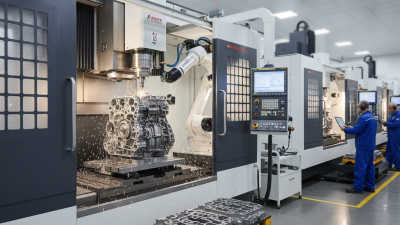
Turning center machines play a crucial role in precision manufacturing. Their features enhance efficiency and accuracy. One notable feature is multi-tasking capabilities. These machines can perform turning, milling, and drilling in one setup. As a result, this reduces setup time and increases productivity.
Another important feature is the ability to handle complex geometries. This capability allows manufacturers to create intricate parts with tight tolerances. Additionally, advanced CNC controls enable precise programming. Operators can achieve consistent results, but errors can still occur. Regular checks and calibration are vital to maintaining accuracy.
Moreover, tooling options greatly influence machining operations. Choosing the right tools is essential for optimal performance. However, frequent tool changes can disrupt the workflow. Balancing efficiency and flexibility is a challenge. Manufacturers must navigate these complexities to fully leverage their turning center machines. Understanding these features helps optimize operations and improve overall productivity.
The Importance of Precision in Manufacturing and Turning Centers
Precision is vital in manufacturing. It affects product quality and performance. Turning centers play an essential role in achieving this precision. They enable the creation of complex parts with exact specifications. With the right features, these machines can enhance overall manufacturing processes.
Turning centers can perform multiple operations. They can turn, mill, and drill components in one setup. This reduces the time required for part handling. However, relying too much on automation can lead to oversights. Operators must remain vigilant to maintain precision. Regular maintenance and checks are necessary to prevent errors.
Investing in high-quality turning centers is important. These machines should be versatile and robust. They need features that support precise measurements. Yet, manufacturers often face challenges in calibrating their equipment. Balancing technology with skilled labor is crucial. This blend can lead to optimal production outcomes. Persistence in refining processes is key to long-term success.
Key Technological Advancements in Turning Center Machines
The evolution of turning center machines has significantly enhanced precision manufacturing. Key advancements include improved automation and smarter control systems. These technologies allow for better accuracy and efficiency. Operators can now execute complex tasks with ease. Automation minimizes human error, but it raises concerns about skill redundancies.
Additionally, modern turning centers integrate advanced sensors that monitor real-time performance. This capability helps in predictive maintenance. Operators receive alerts before issues escalate. However, relying heavily on technology can lead to complacency. Manufacturers must not forget the importance of skilled personnel.
Tool management systems are also becoming vital. They optimize tool usage and extend tool life. Yet, the complexity of these systems can overwhelm some operators. Training is essential to maximize their benefits. Balancing technology with human expertise is crucial for successful precision manufacturing.
Top Turning Center Machine Features and Benefits for Precision Manufacturing
Benefits of Using CNC Turning Centers for Enhanced Efficiency
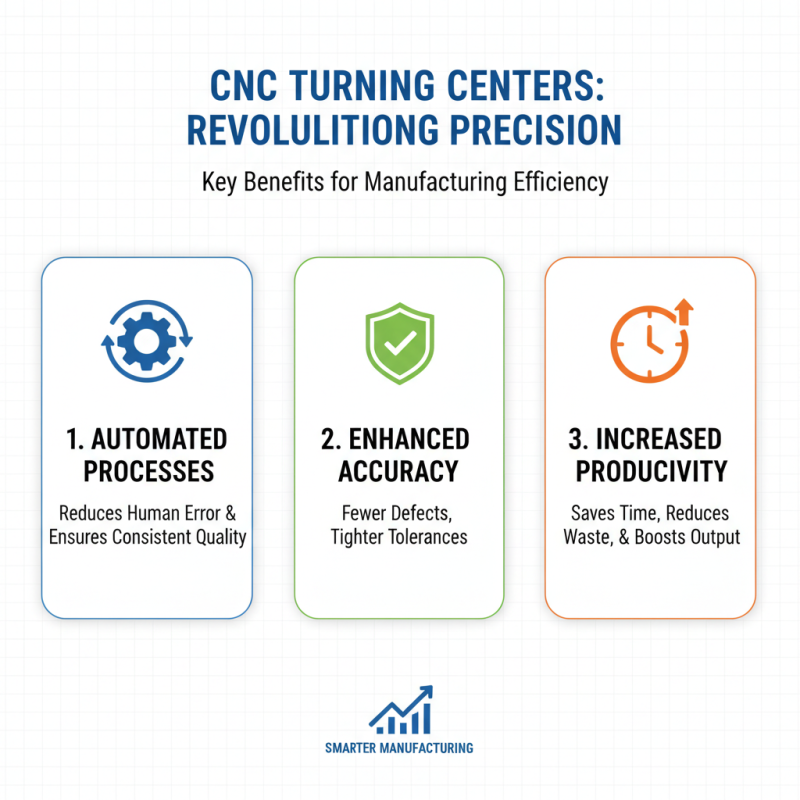
CNC turning centers are revolutionizing precision manufacturing. They offer several advantages that enhance efficiency on the production floor. One key benefit is the ability to automate processes. This reduces human error and ensures consistent quality across multiple parts. With fewer mistakes, manufacturers save time and resources, leading to increased productivity.
Another important aspect is the capability to handle complex geometries. CNC turning centers can create intricate designs with minimal manual intervention. This allows for innovative product development. However, not all operators fully leverage these features. Some may struggle with programming or setup. Continuous training is essential to maximize the machine's potential.
Moreover, these machines enhance material utilization. They minimize waste as they optimize cutting paths. Yet, achieving the best efficiency requires regular maintenance and adjustments. Some shops neglect this, leading to unexpected downtimes. It’s crucial to reflect on these shortcomings for ongoing improvement. Embracing CNC turning centers can drive efficiency, but a proactive approach is key to success.
Comparative Analysis of Turning Center Machines in Industry Applications
Turning center machines are pivotal in precision manufacturing, offering distinct advantages across various applications. For instance, a report by the National Institute of Standards and Technology indicates that these machines improve efficiency by up to 30%. This remarkable increase stems from their ability to perform multiple operations in a single setup, reducing the need for part handling.
In the automotive and aerospace sectors, the demand for precision is non-negotiable. Turning centers can achieve tolerances of up to ±0.005 mm, making them ideal for intricate components. However, challenges remain. Software integration can be complex, and operators may face a learning curve. It's essential to address these issues to fully leverage the technology.
Moreover, the trend towards automation adds another layer of complexity. Studies show that manufacturers using automated turning centers report up to 50% lower labor costs. Yet, not all companies have the resources to implement these systems, creating a disparity in adoption. This highlights the need for a more inclusive approach in technology implementation across the industry.
Top Turning Center Machine Features and Benefits for Precision Manufacturing
| Feature |
Description |
Benefit |
Industry Application |
| High Precision Spindle |
Utilizes advanced bearing technology |
Ensures tight tolerances and surface finishes |
Aerospace, Automotive |
| CNC Control System |
User-friendly interface with intelligent features |
Increases productivity and reduces setup time |
Medical Devices, Electronics |
| Multitasking Capability |
Turning, milling, and drilling in one setup |
Enhances flexibility and minimizes handling |
Energy, Industrial Equipment |
| Automated Tool Change |
Quick tool change systems |
Reduces downtime and optimizes production |
Manufacturing, Prototyping |
| High-Performance Cutting Tools |
Specialized tools for various materials |
Improves cutting efficiency and tool life |
Automotive, Aerospace |
| Robust Machine Construction |
Rugged build for stability and durability |
Minimizes vibrations and extends machine life |
Heavy Machinery, Defense |