What is a Cnc Turning Machine and How Does it Work?
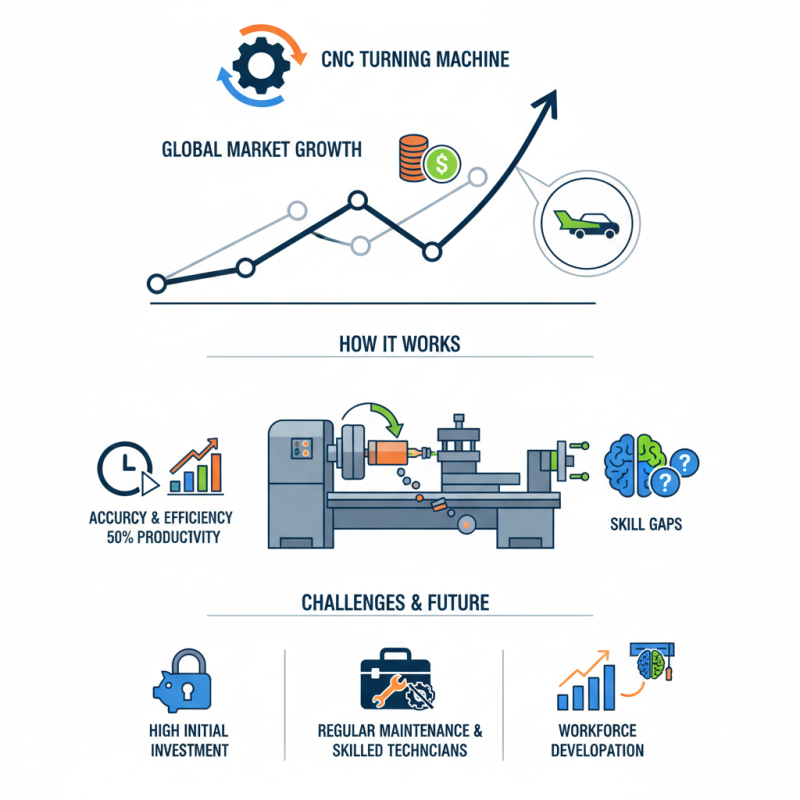
The CNC turning machine is a vital tool in modern manufacturing. According to a report by Market Research Future, the global CNC machine market is projected to reach $100 billion by 2026. This growth highlights the increasing reliance on advanced technology in production processes. The CNC turning machine specifically excels in creating precise cylindrical parts, which are essential in various industries, including aerospace and automotive.
CNC turning machines operate by rotating the workpiece against a cutting tool, enabling high accuracy and efficiency. A study from Technavio indicates that CNC machines offer up to 50% more productivity compared to traditional methods. However, reliance on automation can lead to skill gaps in the workforce. Manufacturers must adapt to these changes to maintain a competitive edge.
Despite their benefits, CNC turning machines are not without challenges. High initial investment costs can deter smaller enterprises. Additionally, the need for regular maintenance demands skilled technicians. As industries evolve, understanding these challenges is crucial for optimizing CNC turning machine operations. Thus, navigating the complexities of this technology requires thoughtful strategies and ongoing investment in workforce development.
What is a CNC Turning Machine?
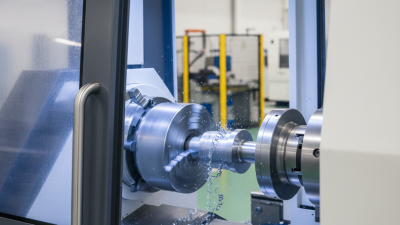
CNC turning machines are essential in modern manufacturing. They transform raw materials into precise components. This process involves rotating the workpiece against a cutting tool. The tool shapes the material, creating intricate designs and specifications. Over 60% of companies in the machining sector rely on CNC technology due to its efficiency and accuracy.
One key aspect of a CNC turning machine is its ability to perform complex tasks. For instance, it can produce parts with multi-axis movements. This capability enables manufacturers to create detailed features that would be difficult with traditional methods. According to industry reports, CNC turning machine utilization has increased by nearly 30% in the last five years, reflecting a growing demand for high-precision parts.
However, relying solely on CNC turning machines isn't without challenges. Operators must possess advanced skills to program these machines effectively. Misalignment or incorrect programming can lead to costly errors. Regular maintenance is also critical, as a lack of upkeep can affect precision and lead to machine downtime. This underscores the importance of worker training and investment in reliable technologies. Balancing automation and skilled labor is crucial in the CNC landscape.
Key Components of a CNC Turning Machine
CNC turning machines are essential in modern manufacturing. They play a vital role in shaping materials into precise components. Understanding the key components of a CNC turning machine helps in grasping its functionality.
The main part of a CNC turning machine is the **spindle**. This element holds and rotates the workpiece. The speed and torque of the spindle are critical for different materials. Another important component is the **tool turret**. It supports multiple cutting tools and can switch between them quickly. This versatility allows for complex shapes to be produced efficiently.
**Tips:** Regularly inspect the spindle for wear. This can prevent costly downtimes.
Next, the **CNC controller** directs the machine’s operations. It interprets coded instructions, ensuring precision in every movement. Lastly, the **coolant system** is vital. It keeps both the workpiece and the cutting tools at optimal temperatures. Overheating can lead to defects.
**Tips:** Use appropriate coolant type for your material. This enhances tool life and accuracy.
Not every setup is perfect. You might face challenges with tool alignment or machine calibration. Reflecting on these issues can lead to better practices. Continuous learning in CNC operations can enhance your proficiency and result quality.
How CNC Turning Machines Operate Step by Step
CNC turning machines are vital in modern machining. They shape parts from rotating materials, creating precise components. The process begins with a computer-aided design (CAD) file. A technician prepares the machine by loading the necessary materials, usually metal or plastic.
Once set up, the CNC machine's computer interprets the CAD file. It controls the spindle's rotation speed and the tool's movements. As the spindle spins, the cutting tool moves along the material, removing excess material. This step is crucial for achieving the desired shape and finish. Operators must regularly check the tool's condition. A worn tool can lead to poor quality.
After the initial shaping, the part undergoes additional processes like sanding or polishing. These enhance the surface finish and accuracy. It's important to note that despite the technology, errors can still occur. Operators must remain vigilant and perform quality checks throughout. CNC turning is a blend of innovation and human oversight. Each step matters in achieving precision and excellence.
CNC Turning Machines: Production Output by Material Type
Common Applications of CNC Turning Machines
CNC turning machines play a crucial role in various industries. These machines are widely used for producing precise cylindrical parts. Common applications include manufacturing components for the automotive, aerospace, and medical sectors. Each of these industries requires highly detailed and accurate components.
In the automotive industry, CNC turning is vital for creating parts like axles and gears. These parts must withstand high stress and offer reliability. Similarly, in aerospace, precision is non-negotiable. Components must meet strict safety standards, ensuring performance under extreme conditions.
The medical field also benefits significantly from CNC turning. Medical devices require high precision for functionality and patient safety. However, the process can sometimes lead to imperfections, such as slight dimensional variances. These need careful monitoring and adjustments to meet exact specifications. Attention to these details is crucial for the success of any CNC project.
What is a CNC Turning Machine and How Does it Work?
| Dimension |
Details |
| Type |
CNC Lathe |
| Control Method |
Computer Numerical Control |
| Process |
Material Removal (Turning) |
| Materials Used |
Metals, Plastics, Wood |
| Common Applications |
Automotive, Aerospace, Medical Devices |
| Advantages |
High Precision, Efficiency, Repeatability |
| Limitations |
Complex Shapes, Higher Initial Cost |
Advantages of Using CNC Turning Technology
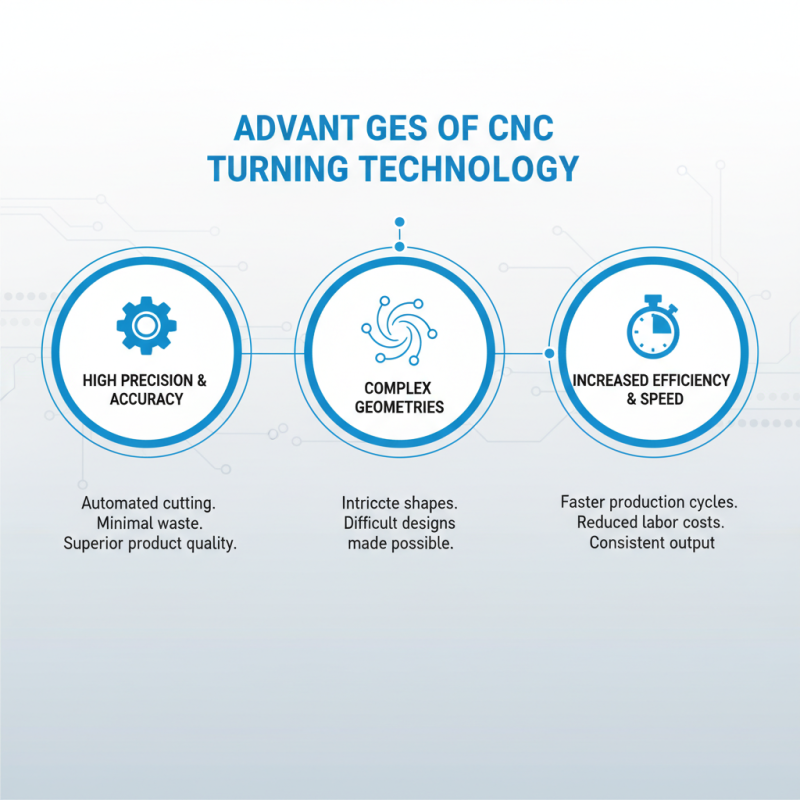
CNC turning technology offers numerous advantages for modern manufacturing. One major benefit is precision. The automated processes ensure high accuracy in cutting and shaping materials. This level of precision reduces waste and enhances product quality. Also, it allows manufacturers to produce intricate designs that would be hard to achieve manually.
Speed is another advantage. CNC turning machines operate continuously, which significantly reduces production time. They can execute complex parts quickly, facilitating faster turnaround times. This efficiency is critical in industries like aerospace and automotive, where timely delivery is essential.
However, relying on CNC technology can pose challenges. Training staff to operate these machines requires time and investment. Also, software issues can halt production unexpectedly. Companies need to assess these factors carefully. Balancing technology and human skill is crucial for optimal results. Implementing CNC turning effectively requires foresight and flexibility.