Top Cnc Lathe Types for Precision Machining in Modern Manufacturing?
In the realm of modern manufacturing, precision is crucial. The Cnc Lathe has emerged as a pivotal tool in this landscape. This machine enables manufacturers to achieve complex designs with minimal error. It plays a vital role in various industries, from automotive to aerospace. With advancements in technology, the types of Cnc Lathes available today offer unparalleled capabilities.
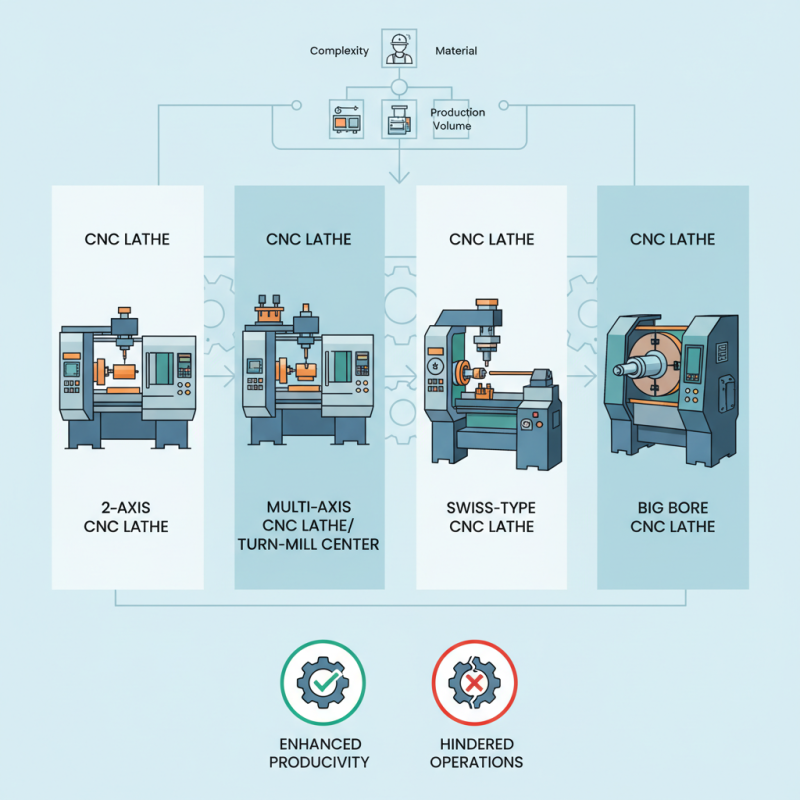
However, not all Cnc Lathes are created equal. Different types cater to varying needs and project requirements. Factors like complexity, material, and production volume guide the choice. Each type brings unique strengths and weaknesses. For instance, while some lathes excel in speed, others prioritize precision.
Manufacturers must reflect on their specific needs before selecting a Cnc Lathe. The right choice can enhance productivity, but the wrong one may hinder operations. Understanding these distinctions can lead to better outcomes in precision machining.
Types of CNC Lathes for Modern Precision Machining
CNC lathes have transformed precision machining in modern manufacturing. Various types cater to different needs. Each serves a specific function, impacting quality and efficiency.
The classic CNC lathe is versatile. It handles various materials and offers automated features. These machines allow for better repeatability and precision. However, they require skilled operators to maximize their potential. Operator training is crucial to avoid costly mistakes.
Another option is the CNC Swiss lathe. It’s ideal for small, intricate parts. It employs a sliding headstock, providing precise control. Yet, these machines can be expensive and demanding to set up. Not every shop may benefit from this investment. Reflection on specific needs can guide the purchasing decision. Each type offers advantages but also limitations. Understanding these nuances is key to success in machining.
Top CNC Lathe Types for Precision Machining in Modern Manufacturing
| CNC Lathe Type |
Description |
Applications |
Precision Level |
| CNC Horizontal Lathe |
Ideal for large, heavy workpieces with high stability. |
Automotive components, shafts, and pipes. |
High precision up to ±0.01 mm. |
| CNC Vertical Lathe |
Allows for easier loading and unloading of workpieces. |
Disc and ring-shaped workpieces, large gears. |
Moderate precision up to ±0.02 mm. |
| CNC Swiss Lathe |
Exceptional for small diameter parts and high production rates. |
Medical devices, watch components, and electronics. |
High precision up to ±0.005 mm. |
| CNC Multi-Spindle Lathe |
Achieves high throughput with multiple spindles. |
High-volume manufacturing of uniform parts. |
Moderate precision up to ±0.02 mm. |
| CNC Turn-Mill Center |
Combines turning and milling in a single setup for complex parts. |
Aerospace components, complex automotive parts. |
Very high precision up to ±0.005 mm. |
Key Features of CNC Lathes Relevant to Manufacturing
CNC lathes are essential for precision machining in modern manufacturing. They offer a range of features that enhance productivity. A key feature is automation, which allows for continuous operation. This leads to higher efficiency and less manual labor. Many CNC lathes have programmable controls, enabling precise cuts and shapes. Operators can input exact specifications, ensuring accuracy.
Another significant aspect is versatility. CNC lathes can handle various materials, including metals and plastics. This adaptability makes them ideal for diverse projects. However, setting up these machines requires skill and precision. Improper setup can lead to defects. Additionally, while they can produce complex geometries, there is a learning curve. New users may struggle with programming, causing delays.
Safety features are also critical in CNC lathes. Emergency stops and safety shields protect operators from harm. Despite these measures, accidents can happen. Regular training and awareness are crucial. Lastly, maintenance is vital for performance. Neglecting upkeep can result in errors and costly repairs.
Comparison of CNC Lathe Designs for Various Applications
CNC lathes are vital for precision machining in manufacturing. Various designs cater to specific applications, making it essential to understand the differences. A 2022 industry report highlights that multi-axis lathes have gained popularity. They offer complex machining capabilities. However, they require skilled operators. The learning curve can pose challenges.
Conversely, CNC Swiss-style lathes excel in producing small, intricate parts. Their sliding headstock design allows for efficient machining of tight tolerances. A study estimates that machining errors can reach 5% with less advanced models. Thus, investing in quality machines and training is crucial. User feedback also suggests that some operators feel overwhelmed by technology changes.
Turning centers are another major category. They combine milling and turning capabilities. Though versatile, their complexity can lead to underutilization. Many shops struggle to adapt effectively, resulting in unused features. Reports emphasize the need for ongoing training to maximize equipment potential. As technology evolves, so should operators' skills.
Top CNC Lathe Types for Precision Machining
This chart compares different types of CNC lathes based on their precision, speed, and versatility in modern manufacturing applications.
Advanced CNC Lathe Technologies for Enhanced Precision
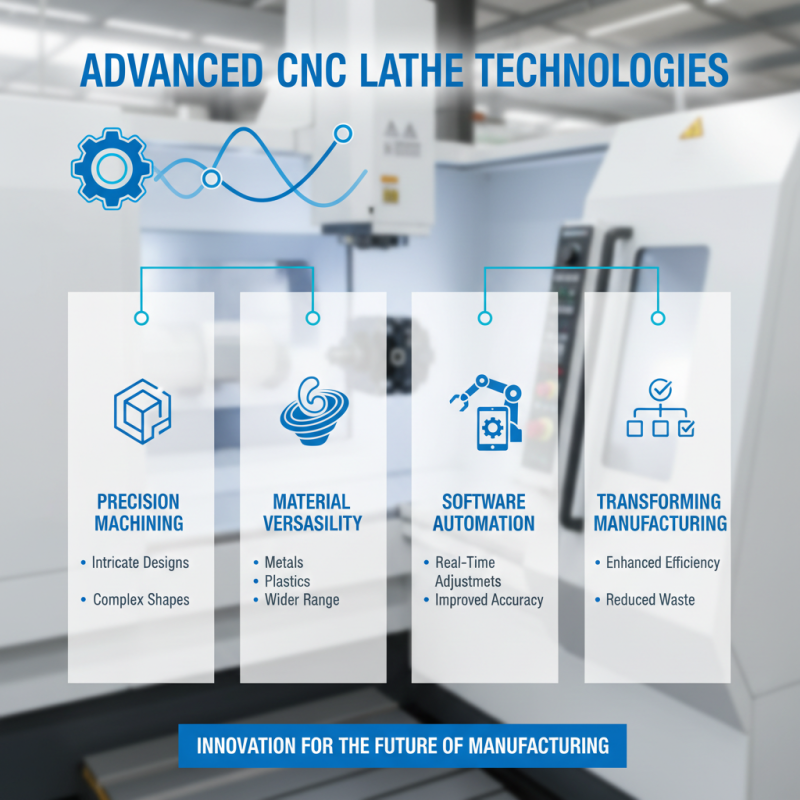
Advanced CNC lathe technologies have transformed precision machining. These innovations allow for intricate designs and complex shapes. Modern lathes can handle a wider range of materials, from metals to plastics, enhancing versatility. A significant advancement is the integration of software automation. This allows for real-time adjustments, improving accuracy.
User interfaces are now more intuitive. Operators can execute commands with ease. Yet, the learning curve remains steep. Not all machinists adapt quickly. This gap can lead to inefficiencies. Additionally, sensor technologies play a crucial role. They provide feedback on tool wear and part dimensions. Miscommunication can occur if operators overlook these alerts.
Moreover, the rise of multi-axis lathes has increased machining capabilities. These machines can perform multiple operations in one setup. This efficiency can reduce production time and costs. However, this complexity comes with its own challenges. Operators may struggle with programming these machines accurately. Maintaining precision in such operations requires constant vigilance. Mistakes can lead to material waste and increased downtime.
Future Trends in CNC Lathe Development and Usage
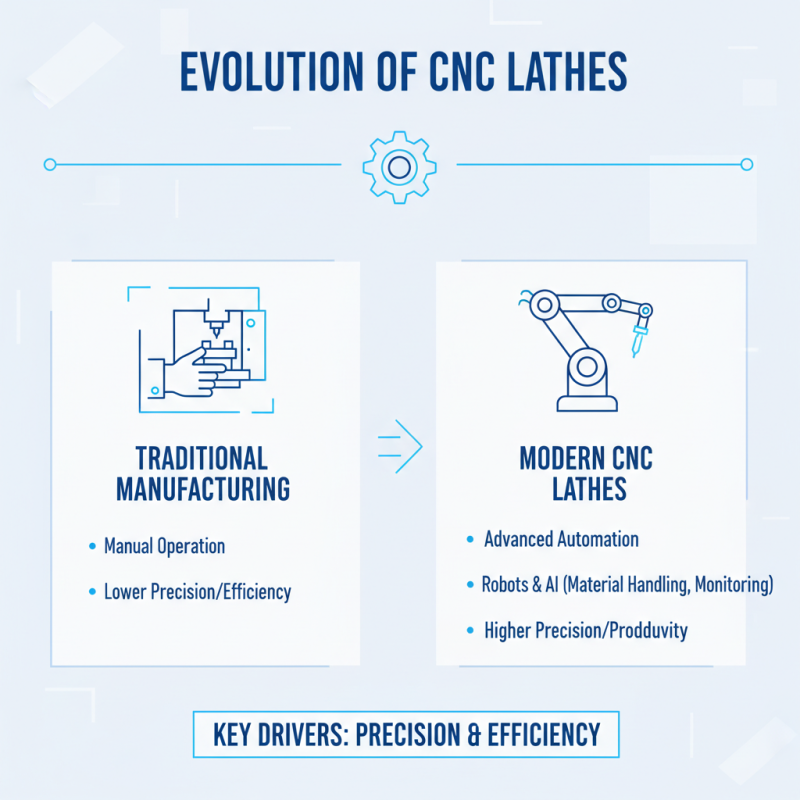
In the landscape of modern manufacturing, CNC lathes are evolving rapidly. The push for higher precision and efficiency shapes their development. One trend is the integration of advanced automation. Robots and AI help in material handling and process monitoring. This can reduce human error and increase productivity significantly.
Another notable trend is the adoption of smart technology. CNC lathes equipped with IoT sensors provide real-time data. This connectivity allows for predictive maintenance, minimizing downtime. Operators can address potential issues before they become costly failures.
**Tips**: When planning to upgrade, consider the integration ease of new lathes. Also, assess training needs for staff. Investing in ongoing education is crucial for maximizing equipment potential. Lastly, be cautious about over-relying on automation; it can lead to skill erosion in your workforce. Balancing technology with human expertise remains vital.