How to Choose the Right Vertical Milling Machine for Your Needs?
Choosing the right Vertical Milling Machine can be a daunting task. Various factors come into play, influencing your decision. Each project has specific needs, and the right machine can make a difference.
Consider your workspace and projects' scale. A compact machine might fit better in a small shop. Larger projects may need robust machines with high power. Not every vertical milling machine suits every application. You must analyze features, such as milling speed and precision.
Reflect on your skill level too. Some machines require advanced knowledge, while others are user-friendly. Mistakes in selection can lead to challenges. Finding the right balance between features and usability is crucial for efficiency.
Understanding Vertical Milling Machines and Their Applications
Vertical milling machines play a crucial role in manufacturing. They are widely used for machining parts and products across various industries. According to a recent report, the global vertical milling machine market is projected to reach $5.2 billion by 2025, reflecting a growing demand. This growth is driven by the need for precision in production processes.
Understanding the applications of vertical milling machines is vital. They are capable of producing complex shapes with high precision. This makes them ideal for industries such as aerospace, automotive, and medical. However, choosing the right vertical milling machine can be challenging. Factors like spindle speed and feed rate can significantly impact productivity. A machine with a high spindle speed might not always suit your needs. Therefore, knowledge of your specific requirements is essential.
Moreover, the advent of advanced technologies is shaping the future of vertical milling. Innovations like CNC technology enhance efficiency but also introduce complexity. Many users struggle to adapt to these changes, leading to potential underutilization of available features. It's important to balance between familiar, traditional methods and adopting newer technologies. Identify what works best for your operations before making a decision.
How to Choose the Right Vertical Milling Machine for Your Needs?
| Feature |
Description |
Recommended Use |
| Spindle Speed |
The maximum RPM a milling machine can achieve |
High-speed machining of hard materials |
| Table Size |
Dimensions of the worktable for holding materials |
Handling larger workpieces |
| Power |
The power of the machine motor, measured in horsepower |
Heavy-duty milling operations |
| Weight |
Overall weight of the machine, affecting stability |
Precision work requiring vibrations reduction |
| CNC Capabilities |
Whether the machine is computer-controlled |
Automated and repeatable production |
| Tooling Compatibility |
Types and sizes of tools the machine can use |
Versatility in machining tasks |
| Ease of Use |
User-friendliness of controls and interfaces |
Beginner machinists or frequent changes in operation |
Key Features to Consider When Choosing a Vertical Milling Machine
When selecting a vertical milling machine, consider its key features carefully. The spindle speed is crucial. Higher speeds allow for finer machining. Look for a machine with variable speed settings. This flexibility accommodates different materials and tasks. The table size also matters. A larger table can handle bigger projects and provide better stability.
Another important feature is the power rating of the motor. A powerful motor ensures efficiency during large-scale operations. However, be mindful that a more powerful motor may consume more energy. Not all tasks require high power, so balance is essential. Also, check the machine's weight and build quality. Heavier machines tend to offer more stability but can make transportation difficult.
Tooling capabilities are another area needing attention. Consider the types of tools the machine can accommodate. Some machines are limited in this regard. Ensure the machine offers a range of tooling options for versatility. This can make the difference in complex jobs. Finally, don’t overlook the importance of user-friendliness. A machine that’s difficult to operate could lead to mistakes. Reflect on what features fit your specific needs and skills.
Assessing the Size and Capacity Requirements for Your Projects
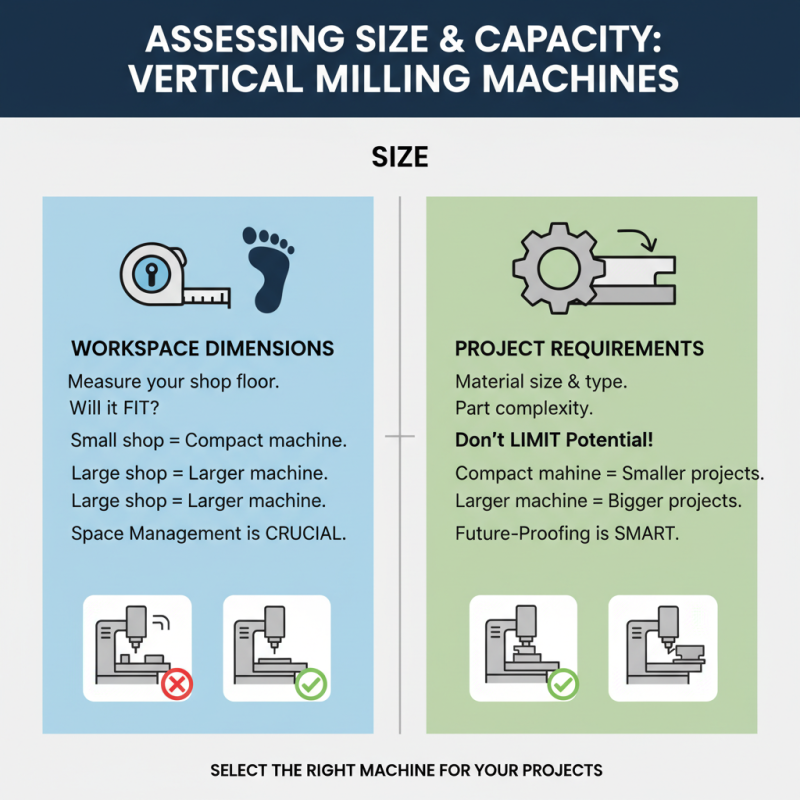
When selecting a vertical milling machine, size and capacity are key factors. Assess the dimensions of your workspace. A large machine may not fit in a small shop. Conversely, a compact model might limit your project potential. Measure the area where the machine will be placed. Space management is vital.
Consider the materials you plan to work with. Heavy-duty tasks require a machine with greater capacity. Check the maximum weight it can handle. If you will be milling large parts, ensure the table size is adequate. Smaller machines can struggle with larger pieces. Reflect on your regular projects and the maximum size they entail.
Do not overlook the spindle speed and power. These factors impact what materials you can work with. If you primarily work with tough materials, opt for higher specifications. Meanwhile, ensure you feel comfortable operating the machine. A well-chosen machine enhances efficiency. However, a poor fit can lead to frustration. Think critically about your needs and preferences before making a decision.
Evaluating the Budget and Cost Factors in Your Purchase Decision
When considering a vertical milling machine, budget is a major factor. Start by determining how much you can afford. Prices vary significantly based on the machine's capabilities. Are you looking for a basic model or one with advanced features? This decision can alter your budget dramatically.
Think about the long-term costs too. Maintenance and repairs can pile up over time. A cheaper machine may save money upfront but could lead to expenses later. Look for used machines, but check their condition carefully. Sometimes, an initial low price masks underlying issues that lead to frustration.
Don’t forget to factor in tooling costs. Tools are essential for operation. They can be quite expensive depending on your needs. Consider the type of materials you will be working with. Some materials require specialized tools that could strain your budget further. It's easy to overlook these details, but they have significant implications for your decision.
Maintenance and Support: Ensuring Longevity of Your Milling Machine
When it comes to vertical milling machines, maintenance is key.
A well-maintained machine can last significantly longer. According to industry reports, regular servicing can extend a machine's life by up to 40%. Neglecting upkeep often leads to breakdowns, reducing efficiency and increasing costs. Small wear and tear can escalate into major problems if ignored.
Tips: Regularly check lubrication levels. Replace worn parts immediately. Clean chips and debris after each use.
Support from technical experts is essential. Having access to knowledgeable technicians can help address issues quickly. A survey of manufacturers revealed that 70% of operators value prompt support when facing downtimes. Without this support, repairs can take longer and lead to lost production. It’s important to establish a relationship with reliable service providers.
Tips: Create a maintenance schedule. Document all repairs and services. Stay informed about common issues with your machine type.