Top 5 Best 5 Axis CNC Machines for Global Buyers?
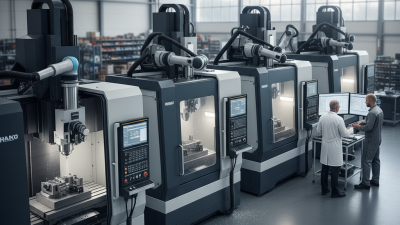
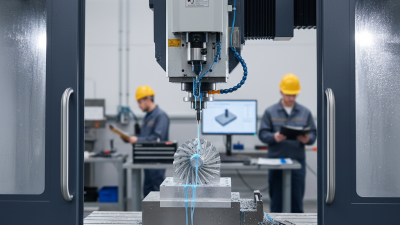
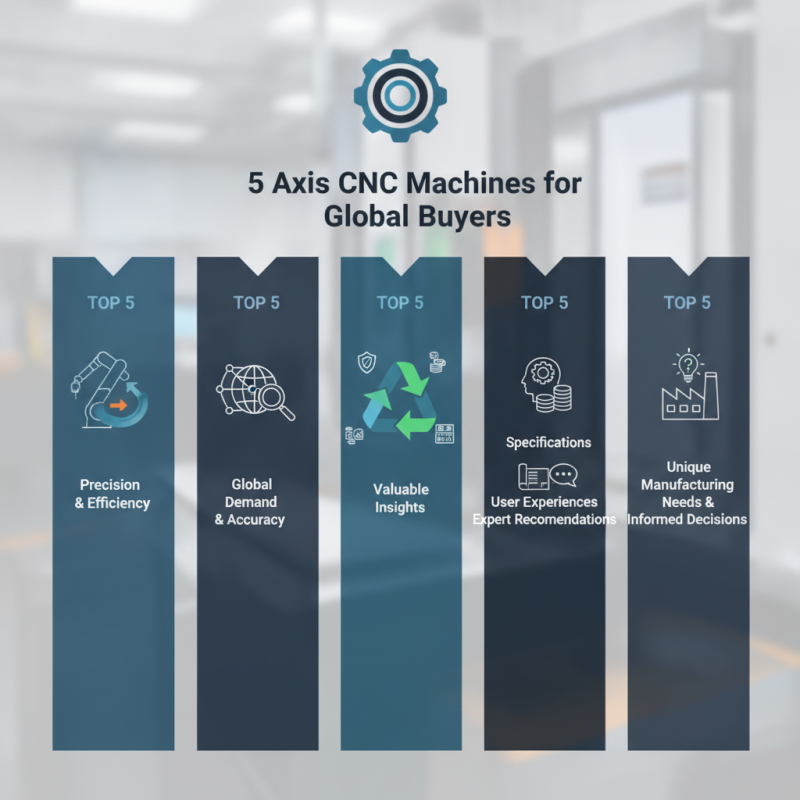
In the ever-evolving world of manufacturing, the 5 Axis CNC Machine stands out as a game changer. This technology enhances precision and efficiency, offering remarkable capabilities in machining complex parts. As global demand for accurate components increases, selecting the right CNC machine becomes crucial.
Many manufacturers face challenges when integrating advanced machinery into their processes. Understanding the features that set the best 5 Axis CNC Machines apart is essential. Users must consider factors like reliability, cost-effectiveness, and ease of operation. Each machine has its own strengths and weaknesses, leaving room for potential refinement.
As we explore the top 5 best 5 Axis CNC Machines for global buyers, the goal is to provide valuable insights. Knowing the specifications, user experiences, and expert recommendations plays a key role in making an informed decision. This analysis seeks to empower buyers to reflect on their unique needs in the manufacturing landscape.
Overview of 5 Axis CNC Machines and Their Importance
5 axis CNC machines have revolutionized manufacturing. They allow for intricate designs and complex parts. This flexibility leads to reduced production time and improved accuracy. According to a report by MarketsandMarkets, the CNC machine market is expected to grow from USD 68.38 billion in 2020 to USD 99.22 billion by 2026. This reflects a significant demand for more advanced machinery, like the 5 axis systems.
These machines offer superior capabilities. They can maneuver in five different axes, enabling them to produce parts that traditional machines struggle with. The concept of multi-axis machining is gaining traction. Industrial sectors, including aerospace and automotive, benefit immensely from these advancements. However, the technology comes with challenges. Many companies lack trained personnel to operate these complex systems effectively. A survey by Deloitte indicated that up to 86% of manufacturers face skill shortages in their workforce.
Investing in 5 axis CNC systems can be daunting. Initial costs are high, which may deter smaller businesses. Yet, the long-term benefits often outweigh these concerns. Businesses must weigh the pros and cons carefully. Understanding the technology's intricacies is essential for responsible investment. It's crucial to approach this evolution with careful planning and awareness of the industry landscape.
Key Features to Consider in 5 Axis CNC Machines
When considering 5-axis CNC machines, several key features stand out.
Precision is paramount.
A machine with a positioning accuracy of ±0.01 mm is critical for high-quality output.
According to industry reports, the global market for CNC machines is expected to reach $100 billion by 2025, highlighting their importance in manufacturing.
The type of controls also matters. Advanced CNC machines often employ closed-loop systems.
These offer better feedback and ensure real-time adjustments. This can enhance efficiency significantly, potentially increasing productivity by up to 25%.
However, cost can escalate quickly with high-end features.
Ease of maintenance is another vital aspect. Machines that require extensive training or complex setups can hinder operational efficiency.
Regular maintenance schedules should be manageable. Many buyers overlook this, leading to unexpected downtimes.
The best machines provide user-friendly interfaces yet can still present challenges.
Balancing features with usability is essential in making an informed decision.
Top 5 Recommended 5 Axis CNC Machines for Global Buyers
When selecting a 5 axis CNC machine, buyers focus on precision, versatility, and reliability. These machines allow for intricate designs and complex geometries. With advanced technology, they minimize setup time and enhance productivity. Many industries, including aerospace and medical, depend on these capabilities.
One key feature to consider is the machine's software. User-friendly interfaces simplify operation. Some machines offer advanced features for automation. However, these can come with a steep learning curve. Users must invest time to grasp all functionalities. It's essential to weigh the benefits against the training required.
Maintenance is another critical aspect. Regular upkeep ensures longevity and consistent performance. Neglecting this can lead to costly repairs and downtimes. Finding a balance between automation and manual intervention is crucial. Proper training and maintenance practices can significantly enhance machine life and output quality.
Top 5 Recommended 5 Axis CNC Machines for Global Buyers
| Model |
Work Envelope (mm) |
Max Spindle Speed (RPM) |
Control System |
Price Range (USD) |
| 5AX-M1 |
600 x 600 x 600 |
24000 |
CNC Control V4.0 |
$100,000 - $120,000 |
| 5AX-M2 |
800 x 800 x 800 |
20000 |
SmartControl 3.2 |
$150,000 - $180,000 |
| 5AX-M3 |
500 x 500 x 500 |
30000 |
Mach3 |
$90,000 - $110,000 |
| 5AX-M4 |
700 x 600 x 600 |
22000 |
Fusion 360 |
$125,000 - $145,000 |
| 5AX-M5 |
1000 x 800 x 800 |
18000 |
WinCNC |
$140,000 - $160,000 |
Comparative Analysis of Performance and Specifications
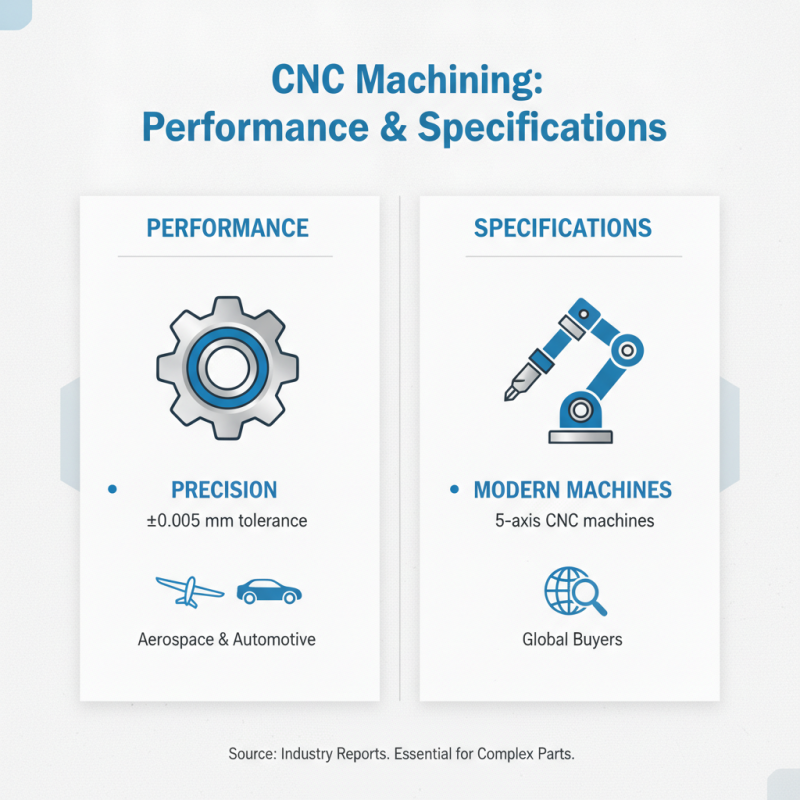
The CNC machining industry has seen significant advancements in technology. A comparative analysis of performance and specifications reveals essential factors for global buyers. Precision is a critical parameter. Industry reports suggest that a tolerance of ±0.005 mm is achievable with modern 5 axis machines. This level of precision is vital for complex parts in sectors like aerospace and automotive.
Furthermore, the spindle speed often ranges between 10,000 to 30,000 RPM. This speed affects both the material removal rate and surface finish. For instance, higher speeds can lead to improved surface quality but may require more robust tooling. Several studies indicate that machines with higher rigidity offer better performance under these extreme conditions. However, not all manufacturers achieve this balance effectively.
When evaluating machine specifications, consider factors such as axis movement and weight capacity. Some machines may boast five simultaneous axes, yet their overall payload might be limiting. Additionally, user feedback often highlights the importance of software integration. Many operators find that robust software aids in achieving desired outcomes. Nonetheless, inconsistencies in user experience signal a need for further development in this area.
Customer Reviews and Industry Feedback on Selected Models
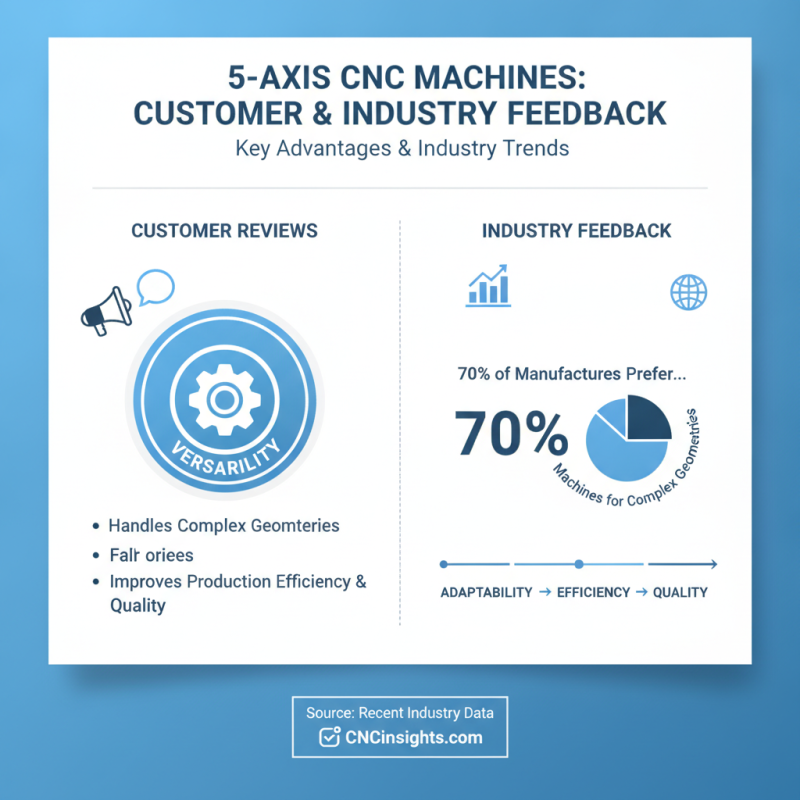
When considering 5-axis CNC machines, customer reviews play a vital role in shaping the industry's perception. Users often highlight versatility as a key advantage. According to recent industry data, about 70% of manufacturers prefer machines that can handle complex geometries. This adaptability significantly impacts production efficiency and quality, an important consideration for buyers.
However, not all models receive glowing reviews. Some users report challenges with software compatibility. It's noted that around 40% of customers experience difficulties integrating older systems with new machines. Additionally, maintenance costs can be a concern; 30% of users express dissatisfaction with unanticipated expenses. It’s essential for prospective buyers to weigh these factors carefully.
User feedback also emphasizes the importance of support services. Comprehensive technical support can significantly reduce downtime. Reports indicate that efficient customer service enhances user satisfaction by 25%. Yet, many buyers still face long response times when troubleshooting issues. Overall, while many machines offer exceptional capabilities, potential users must critically assess all aspects, including user experiences, to make informed decisions.