Top 10 Benefits of Using a CNC Lathe for Precision Manufacturing?
In the realm of precision manufacturing, the Cnc Lathe stands out as an essential tool. According to a 2022 industry report, global CNC machinery sales reached $85 billion. This growth is driven by the increasing demand for precision in various sectors, including aerospace and automotive. The Cnc Lathe plays a crucial role in this demand, offering unmatched accuracy and repeatability.
Cnc Lathes enable manufacturers to produce complex parts consistently. Their automation allows for rapid production, reducing waste and improving efficiency. A recent survey indicated that companies using CNC machinery reported a 30% increase in productivity. However, while benefits are significant, challenges exist. Initial investment costs can be high, and skilled operators are necessary.
Some manufacturers may underestimate the importance of proper training. Inadequate knowledge can lead to errors and increased downtime. Recognizing the potential limitations is vital for leveraging the true capabilities of Cnc Lathes. Embracing continuous learning and adaptation will ensure that manufacturers can harness the full benefits of this sophisticated technology.
Benefits of CNC Lathes: Enhanced Precision in Manufacturing Processes
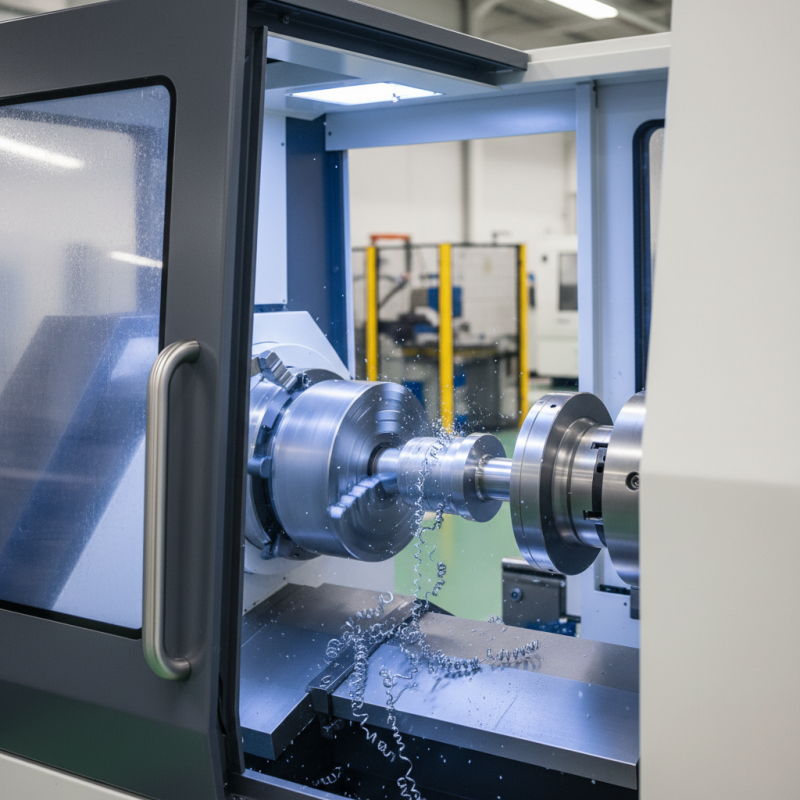
CNC lathes revolutionize precision manufacturing. They provide unmatched accuracy and efficiency. A report from the National Institute of Standards and Technology states that these machines can enhance production quality by up to 30%. This accuracy minimizes material waste, which can save manufacturers significant costs.
Moreover, the flexibility of CNC lathes allows manufacturers to handle complex designs with ease. They can produce intricate parts that manual lathes struggle with. However, it's essential to note the learning curve associated with CNC technology. Operators must be skilled and well-trained to fully leverage the machinery's capabilities. This training often requires time and resources, which not every company can afford.
Manufacturers should also consider maintenance. CNC lathes require regular upkeep to maintain precision. Neglecting maintenance can lead to errors in production and increased downtime. Some companies might underestimate this aspect when calculating CNC technology's benefits. In reality, careful monitoring is crucial to reap the full advantages.
Increased Production Efficiency Through Automated CNC Lathe Operations
CNC lathes revolutionize precision manufacturing. They automate processes that were once labor-intensive. This automation boosts production efficiency significantly. With a CNC lathe, tasks like turning, drilling, and shaping become quicker. Workers can focus on overseeing operations instead of manual labor.
Reduced human error is another advantage. Machines follow programmed instructions flawlessly. They cut down on mistakes that can lead to rework. However, relying solely on technology does require careful calibration. Regular maintenance is vital to prevent breakdowns.
Yet, not all parts are ideal for CNC lathes. Complex designs may need alternatives. It’s important to analyze part requirements carefully. Finding the right balance between speed and precision is crucial in all CNC operations. Even with automation, human oversight remains essential in the manufacturing process.
Reduction of Material Waste Using CNC Lathe Technology
CNC lathe technology significantly reduces material waste in precision manufacturing. Studies show that traditional machining methods can waste up to 40% of raw materials. In contrast, CNC lathes optimize the cutting process. They precisely calculate tool paths and reduce unnecessary cuts. This efficiency leads to substantial cost savings and maximizes resource utilization.
A recent report from the International Journal of Engineering states that companies using CNC lathes experience a 25% reduction in waste. This shift not only saves materials but also benefits the environment. Less waste means lower disposal costs and a smaller carbon footprint. Adopting CNC technology reflects a commitment to sustainability in manufacturing processes.
Tip: Regular maintenance of CNC lathes can further enhance material efficiency. Ensure that tools are sharp and calibrated correctly. Over time, even minor inaccuracies can lead to increased waste. Staying proactive in maintenance can deliver better performance and more environmental benefits.
Top 10 Benefits of Using a CNC Lathe for Precision Manufacturing
This chart illustrates the top benefits of using CNC lathe technology in precision manufacturing, highlighting the significant reduction in material waste along with other advantages such as increased precision and improved efficiency.
Cost Savings and ROI: CNC Lathes in Modern Manufacturing
CNC lathes are revolutionizing modern manufacturing. They offer a range of cost-saving opportunities. The precision and accuracy of these machines lead to minimized waste. This means less material is wasted during production. Companies can produce parts faster and more efficiently. The overhead costs associated with manual machining are significantly reduced.
However, investing in CNC lathes requires careful consideration. Initial costs can be high, and the technology needs skilled operators. Maintenance costs must also be factored in over time. Failure to keep machines well-maintained can lead to unexpected breakdowns. These issues can impact ROI. Organizations must analyze their production needs and potential benefits closely.
Yet, when implemented correctly, CNC lathes can provide substantial returns. They streamline workflows and improve product quality. This often leads to higher customer satisfaction. Increased output can enhance market competitiveness. Companies that adopt this technology must monitor their processes continuously. They should also be prepared to adapt to changing demands in the industry.
Top 10 Benefits of Using a CNC Lathe for Precision Manufacturing
| Benefit |
Description |
Cost Savings |
ROI (%) |
| Increased Precision |
CNC lathes provide high precision in manufacturing parts, reducing errors significantly. |
20% |
150% |
| Lower Labor Costs |
Automating processes reduces the need for manual labor, cutting costs. |
30% |
120% |
| Shorter Production Time |
CNC lathes operate faster than manual machines, speeding up the production process. |
25% |
130% |
| Consistency and Repeatability |
CNC technology ensures that each part is produced with the same specifications. |
22% |
140% |
| Flexibility in Design |
CNC lathes can produce complex designs that are difficult for manual lathes to create. |
15% |
110% |
| Material Efficiency |
CNC lathes optimize material usage, minimizing waste and saving costs. |
10% |
100% |
| Reduced Setup Time |
CNC machines can be programmed for various tasks quickly, reducing downtime. |
20% |
125% |
| Increased Production Capacity |
Higher speeds allow for greater output in the same time frame. |
27% |
135% |
| Better Safety |
CNC lathes reduce human interaction with high-speed equipment, enhancing safety. |
18% |
115% |
| Advanced Technology Integration |
CNC lathes can easily integrate with CAD and CAM systems for advanced design techniques. |
12% |
105% |
Versatility of CNC Lathes: Applications Across Various Industries
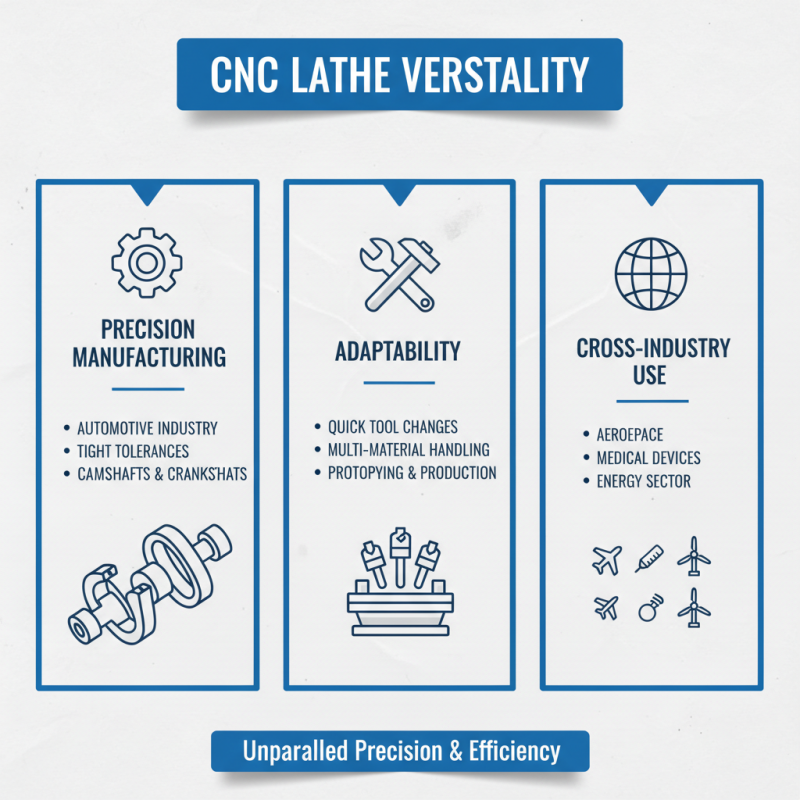
CNC lathes provide unmatched versatility across various industries. They are crucial in automotive manufacturing, where precision is vital. Parts like camshafts and crankshafts require tight tolerances. CNC lathes can effortlessly handle such specifications. Their adaptability allows for quick changes in tooling, accommodating different materials easily.
In aerospace, these machines create intricate components. Turbine blades and landing gear parts demand high precision to ensure safety. The programmability of CNC lathes improves efficiency. However, they can produce waste if not calibrated correctly. Regular maintenance is essential to avoid costly errors.
Medical manufacturing also benefits greatly. Customized implants and surgical tools rely on the precision of CNC lathes. Yet, even a tiny misalignment could lead to complications. Operators must carefully monitor every step in the production process. This constant scrutiny is a double-edged sword, adding pressure to the workforce. As industries evolve, the need for precision and accuracy will only intensify.